
SaaS FAQ Sections That Actually Reduce Support Tickets
Sanity replaced its FAQ with a live AI chat agent. Firecrawl splits 25+ questions into four labeled categories. A real look at 12 SaaS FAQ sections — and why almost none of the questions are actually about troubleshooting.
By Derek Paul
Every question and layout detail below is pulled from BestSaaSWebDesigns' catalog of 400+ captured SaaS sites — a real FAQ section in each case, not a generic "how to write an FAQ" list. If one of these patterns is worth seeing at a larger sample size, the full FAQ section hub has the rest of the catalog's captures in the same format.
When a FAQ section stops being a FAQ section
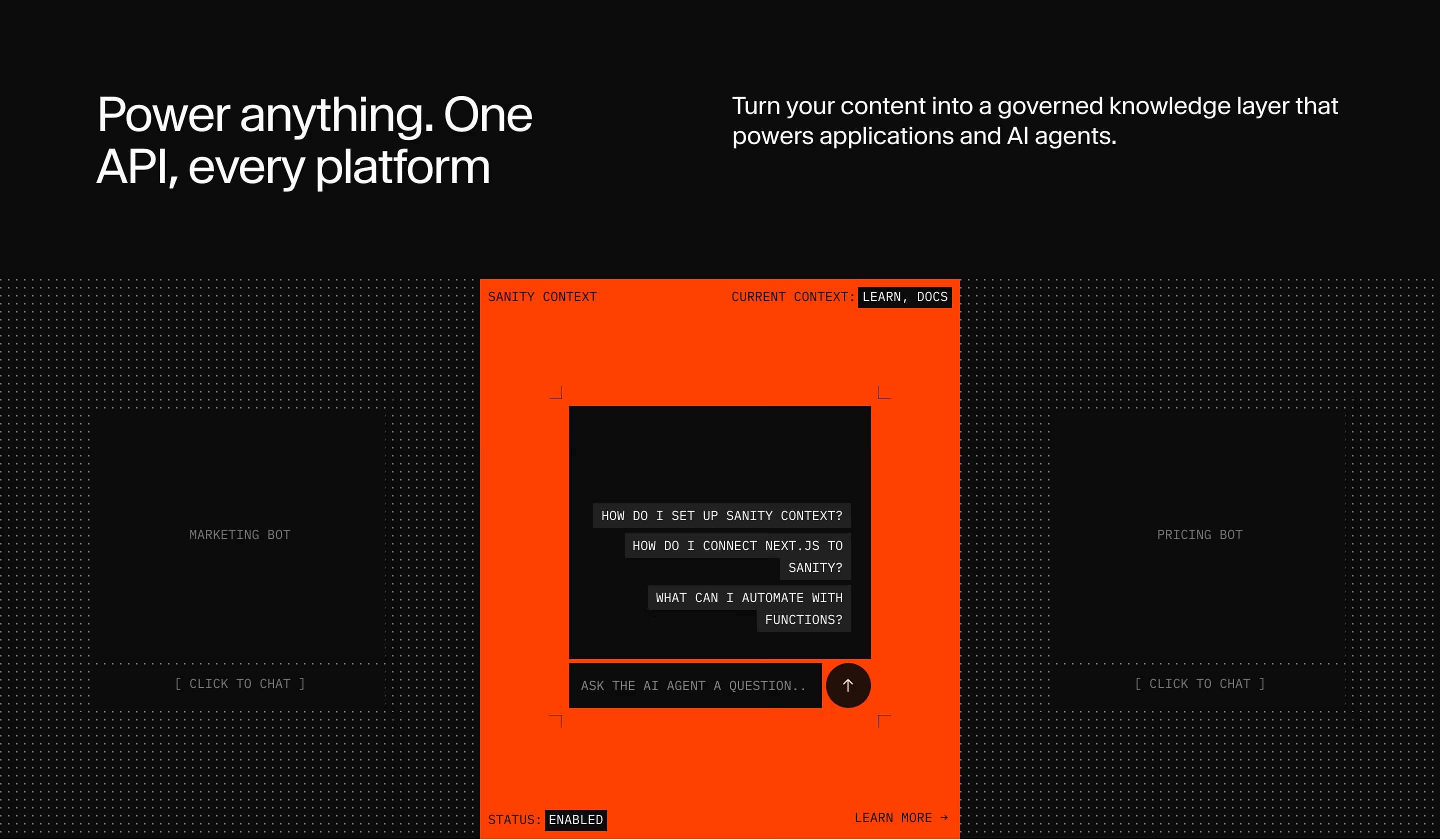
Sanity's "FAQ" slot isn't a list of questions at all. On a bright orange, terminal-styled background labeled "SANITY CONTEXT," it shows a black chat panel with sample prompts as dark pill bubbles — "HOW DO I SET UP SANITY CONTEXT?", "HOW DO I CONNECT NEXT.JS TO SANITY?" — next to a live input field and two more bot modules labeled "MARKETING BOT" and "PRICING BOT." Instead of pre-writing answers, Sanity scopes a real AI agent to each topic area, which is a structurally different way to attack the same ticket-deflection goal a normal FAQ section is built for.
Simple products get a short flat list; technical products get labeled categories
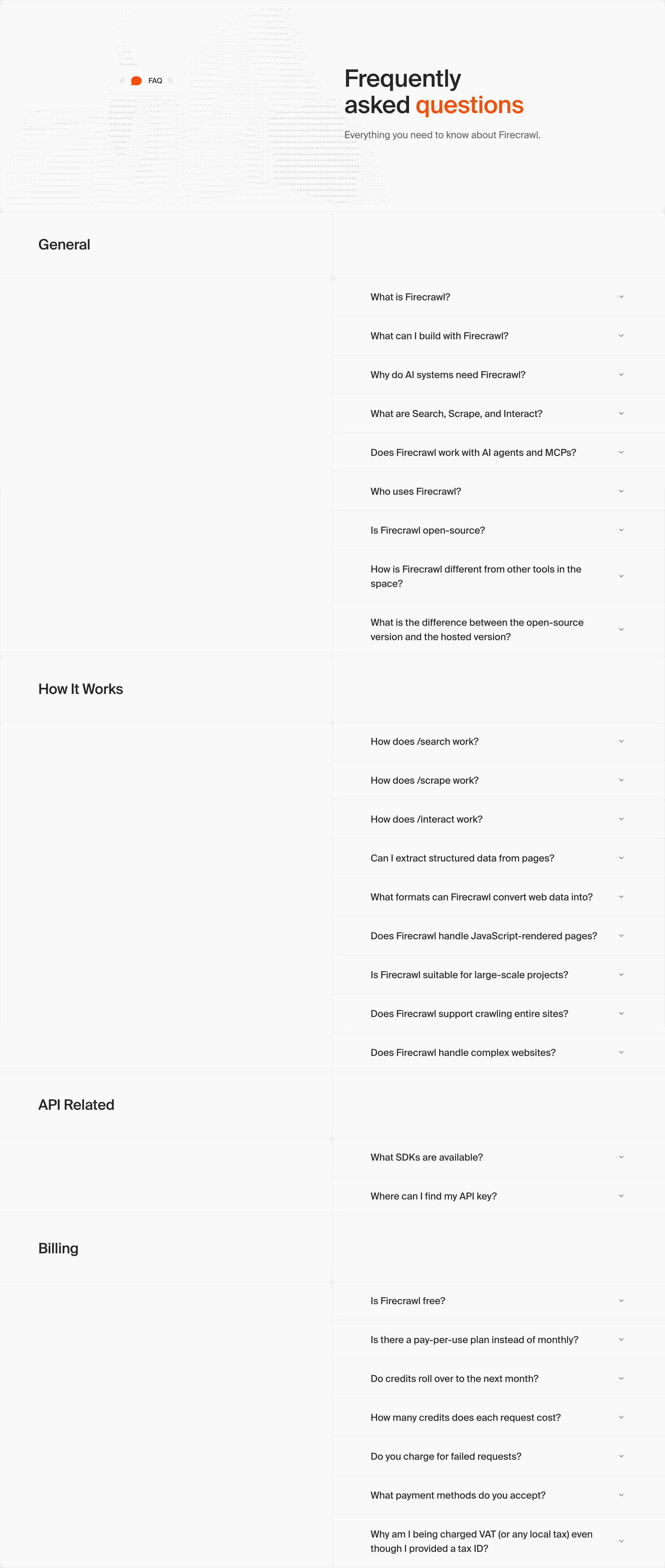
Firecrawl's FAQ is the most structurally complex reviewed: a light gray section headlined "Frequently asked questions" (with "questions" highlighted in orange) organized into four labeled two-column groups — General (9 questions, including "How is Firecrawl different from other tools?"), How It Works (10 questions, including "Does Firecrawl handle JavaScript-rendered pages?"), API Related (2 questions), and Billing (6+ questions, including "Do credits roll over to the next month?"). That's appropriate for a technical API product with genuinely distinct support surface area. Teachable sits at the opposite end: a clean white section with a distinctive fully-rounded pill accordion style, only 4 questions total, covering cancellation, plan changes, transaction fees and audience — proof a short flat list is still a real, working choice for a simpler product.
The rhyming headline shows up again and again
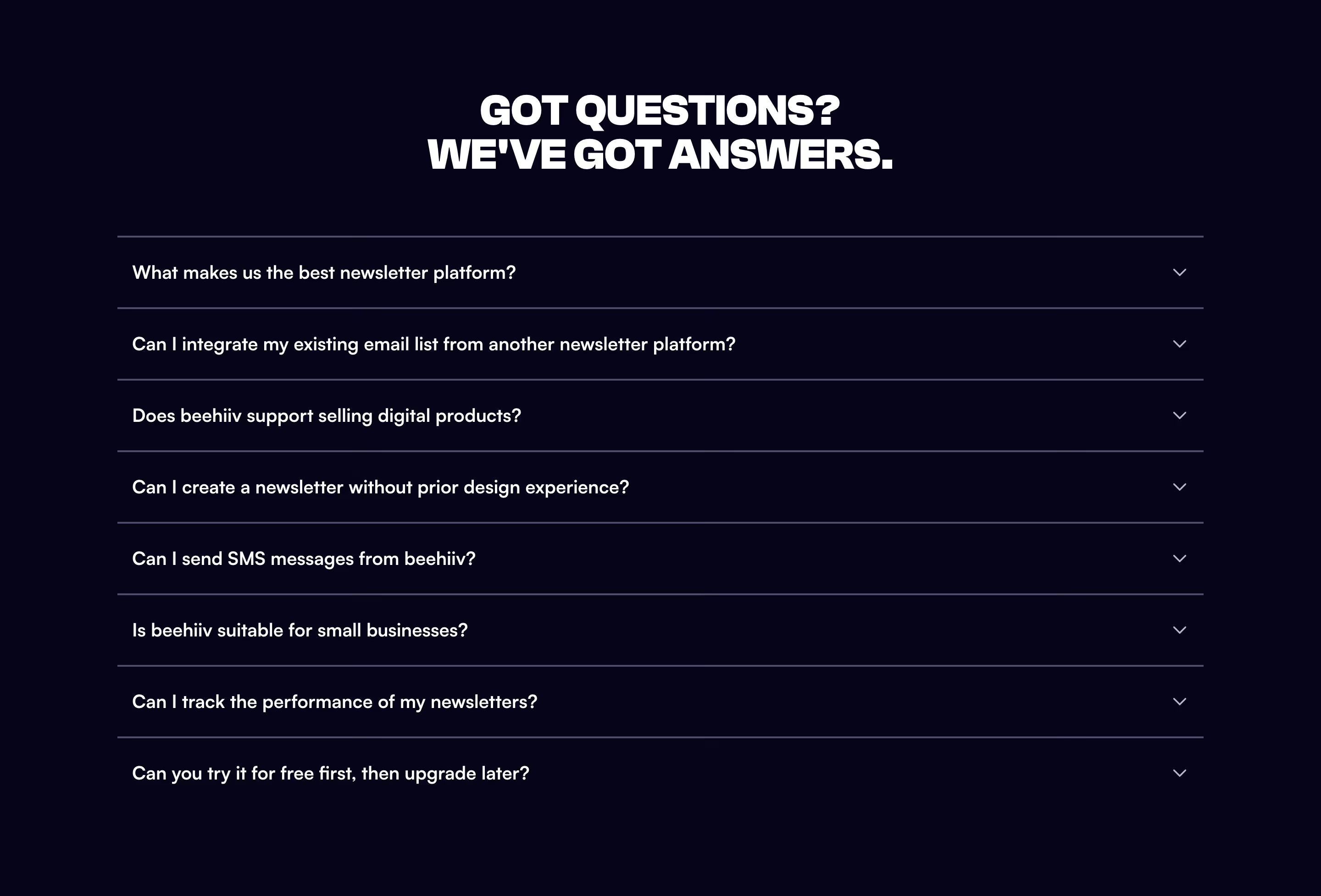
Beehiiv's dark-navy FAQ section is headlined, in bold all-caps condensed type, "GOT QUESTIONS? WE'VE GOT ANSWERS." — and the near-identical phrasing turns up twice more in this same batch of real, unrelated sites: Kombai's near-black FAQ section reads "Questions? We've got answers." with a mint-green accent border, and Altitude's elegant serif FAQ reads "Got Questions? We've got answers" paired with an italic subhead. Three different companies, three different categories (Marketing, Developer Tools, Finance), the same headline convention almost word for word — strong evidence this is a genuine shared pattern rather than a coincidence of this sample.
Pre-expanding the first answer as an elevator pitch

Gusto's warm, serif-headlined FAQ section pre-expands its very first question, "What does Gusto do?", into a full paragraph covering payroll, taxes, compliance, hiring, onboarding and benefits — the answer doubles as an elevator pitch a visitor sees without clicking anything. Jasper's soft pink FAQ section does the same, expanding its first answer (full of inline links to "Jasper IQ" and "brand voice") while using its remaining collapsed questions specifically for competitive positioning: "Is Jasper a chatbot?", implicitly answering the unspoken "is this just ChatGPT?" objection every AI-category buyer is likely to have.
FAQ questions are mostly objection-handling, not troubleshooting
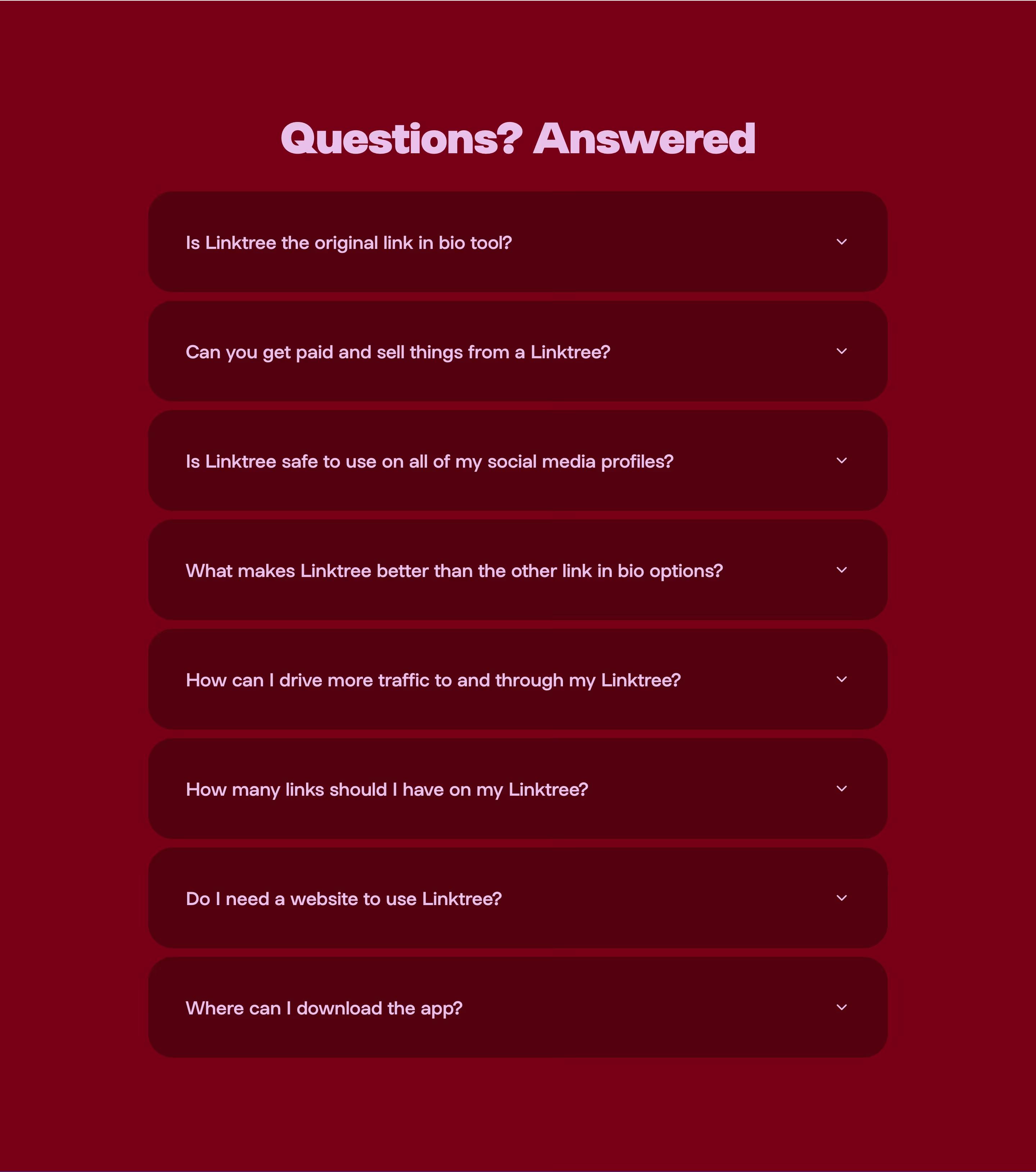
Linktree's bold maroon FAQ section runs nine questions — the longest flat list in this set — and none of them are "how do I reset my password"-style support questions. Instead: "Is Linktree safe to use on all of my social media profiles?", "What makes Linktree better than the other link in bio options?", "How many links should I have on my Linktree?" — safety reassurance, direct competitive differentiation, and best-practice coaching, in that order. Altitude, a Finance-category product, runs the same pattern through a risk-conscious lens instead: "How accurate is Altitude's analysis?", "Is my firm's data secure with Altitude?" — trust and accuracy dominate because that's the real objection a finance buyer has, not confusion about how to click a button.
ClickHouse and Upvoty both confirm the same shape at smaller scale: ClickHouse's technical FAQ ("Why should I use ClickHouse vs. X database?", "What is OLAP?") is comparison-and-education-heavy for a database product, while Upvoty bundles a common real friction point into one question — "Is there a free trial? Do I need a credit card?" — rather than splitting it awkwardly into two.
What the range across these twelve actually shows
Every one of these twelve real FAQ sections is doing sales and trust work, not support-ticket deflection in the literal sense — the "reduce support tickets" framing in this piece's own title is really about pre-empting the objections that would otherwise turn into a sales question or a lost signup, not about replacing a help center. See the full FAQ section hub for the rest of this catalog's real examples, or read how the pricing pages these same FAQs often sit beside handle the same objections a different way.
At a glance
| Site | Category | Stack |
|---|---|---|
| Firecrawl | Engineering & Infrastructure | Next.js, Tailwind CSS |
| Sanity | Engineering & Infrastructure | Astro, Tailwind CSS |
| Beehiiv | Marketing | Next.js, Tailwind CSS |
| Gusto | People & Culture | Next.js |
| Jasper | Marketing | Webflow |
| Linktr | Productivity & Collaboration | Next.js, Tailwind CSS |
| Altitude | Finance & Commerce | Tailwind CSS |
| Clickhouse | Engineering & Infrastructure | Next.js, Tailwind CSS |
| Teachable | Finance & Commerce | Webflow |
| Upvoty | Productivity & Collaboration | Tailwind CSS |
| Supademo | Marketing | Next.js, Tailwind CSS |
| Kombai | Engineering & Infrastructure | Next.js, Tailwind CSS |
Frequently asked
Should a SaaS FAQ section pre-expand the first answer?
In this catalog, five of twelve sites (Gusto, Teachable, Jasper, Upvoty, Supademo) default-open the first question rather than showing a fully collapsed list. It's a cheap way to prove the accordion is interactive and to lead with the strongest, most elevator-pitch-style answer — Gusto's expanded first answer reads almost like a mini product description.
Do FAQ questions need to be organized into labeled categories?
Only when the product has enough distinct support surface area to justify it. Firecrawl is the one example here that splits into four labeled groups covering 25+ questions, while simpler products like Teachable get away with a flat 4-question list. Segmenting too early on a small FAQ just adds visual overhead.
What kinds of questions actually show up in real SaaS FAQ sections?
Across this sample, the dominant categories were competitive differentiation (Jasper's "is this different from ChatGPT?"), trust and security (Altitude's "Is my firm's data secure?"), pricing and trial mechanics (Upvoty's combined free-trial-plus-credit-card question), and integration compatibility (Kombai's Figma import question) — far more sales-objection-handling than how-do-I-use-this troubleshooting.
Can an AI agent find more real FAQ sections?
Yes. The free BestSaaSWebDesigns MCP server can filter the catalog to sites with a captured FAQ section, by category or style, and return their links. Add it from bestsaaswebdesigns.com/mcp.
Related reading
The 30 Best SaaS Websites in 2026 (Reviewed From Real Screenshots)
Thirty SaaS websites reviewed at equal depth from screenshots we captured ourselves — what's above the fold, the one section each does unusually well, and the stack, palette and typefaces behind it. With a stated selection method, not a handpicked vibe check.
22 SaaS Affiliate Program Pages, and the Terms They Actually Publish
Semrush publishes a 120-day cookie window and a four-tier commission table. Typeform caps you at $500 per referral. Seven of these 22 pages publish no rate at all. A page-by-page read of what SaaS affiliate pages actually disclose.
12 Real SaaS Hero Sections That Nail the First 5 Seconds
What Firecrawl, Xata, Rootly, Monday, Superlist, Tidio and six other real SaaS companies actually put above the fold — real headlines, real CTAs, real product UI, not generic hero-section advice.