
22 SaaS Affiliate Program Pages, and the Terms They Actually Publish
Semrush publishes a 120-day cookie window and a four-tier commission table. Typeform caps you at $500 per referral. Seven of these 22 pages publish no rate at all. A page-by-page read of what SaaS affiliate pages actually disclose.
By Derek Paul
An affiliate page has an unusually narrow job. Someone with an audience wants to know four things — what you pay, whether it keeps paying, how long the cookie lasts, and when the money lands — and the page either says or it doesn't. Unlike a homepage or an About page, there is no version of this where atmosphere substitutes for information.
BestSaaSWebDesigns read 50 of these pages from its catalog and logged the numbers on each one. The single most surprising finding isn't any specific rate — it's that of the 22 pages here, only four publish a cookie window, and not one publishes a minimum payout threshold, which are the two facts an experienced affiliate checks first and the two most likely to be missing.
How these were chosen
Every example below is pulled from BestSaaSWebDesigns' catalog of 382 fully captured sites. Of those, 103 have an affiliate or partner page captured, which is the pool behind the affiliate pages hub. 50 were pulled as candidates, with every screenshot tile read before a word was written about any of them.
Three things knocked a page out. A capture that couldn't be read. 1Password's captured with the cookie consent modal parked over the middle of the hero and nothing but white below it, so the only checkable fact is that the headline reads "Become a 1Password affiliate." Pipe's and Coda's captures both stop at 900 pixels, above the fold only; Coda's is also mid-rebrand, with a "Coda is now Superhuman Docs" banner across the top.
A product page filed as an affiliate page. beehiiv's capture is its newsletter referral program feature — a page selling you the tooling to run your own programme, with no beehiiv affiliate terms anywhere. Dub's is the Dub Partners product page: it publishes real numbers ($34M+ in commissions earned by partners, 7,000+ active partners) but they describe its customers' programmes, not its own.
No terms and no substance. A handful said only "grow with us" next to a button, leaving nothing checkable to quote.
What's left is 22 pages: 15 that state a commission figure and 7 that state none. The seven were kept deliberately — the absence is the second-most interesting thing here.
What the terms actually look like
Every cell below was read off a screenshot. "Not stated" means the page does not say it anywhere we could see — including, in several cases, where the question is asked in a collapsed FAQ whose answer is hidden.
| Site | Headline commission | Recurring? | Cookie window | Cap / bonus structure |
|---|---|---|---|---|
| Semrush | $100–$300 per sale by product; $10 per free trial | One-time per sale | 120 days | 4 tiers by sales/quarter, rate published for each |
| Typeform | 15% of monthly subscription | Yes, monthly | Not stated | Hard cap of $500 total per referral |
| Teachable | 30% | Yes, first 12 months | 30 days | Not stated |
| Craft | 50% of each payment | Yes, first 12 months | Not stated | Not stated |
| Cal.com | 20% | Yes, 12 months | Not stated | Referral also gets 20% off for 12 months |
| Looka | 25% / 30% / 35% | Not stated | Not stated | 3 bands by trailing-30-day sales |
| monday.com | Up to 100% of first-year sales | First year | Not stated | "Tier model", thresholds not stated |
| Oyster | 10% revenue share | Not stated | Not stated | $250 on 1st referral, $500 on 2nd |
| Gorgias | $50 for a demo, then $120–$3,000 | One-time | Not stated | Keyed to referral's plan; $3,000 at Enterprise |
| Gusto | $200+ per sale | Not stated | 120 days | Not stated |
| ClickUp | Up to $25 per free-workspace signup | One-time | 30 days | Tiers at 100 and 200 signups/month |
| Descript | $25 per new subscriber | One-time | Not stated | Explicitly no minimum sales |
| VEED | 20% on sales and subscriptions | Not stated | Not stated | Bonuses up to 50% |
| Pitch | Up to $100 per referred sign-up | One-time | Not stated | Not stated |
| Dropbox | 500 MB (Basic) / 1 GB (Plus) storage | One-time | Not stated | Not stated |
| Tidio | Not stated | Not stated | Not stated | Not stated |
| Aircall | Not stated | Not stated | Not stated | Tiers described, no rates |
| Notion | Not stated | Not stated | Not stated | Not stated |
| Supabase | Not stated | Not stated | Not stated | Not stated |
| Retool | Not stated | Not stated | Not stated | Not stated |
| Teamwork | Not stated | Not stated | Not stated | Not stated |
| Culture Amp | Not stated | Not stated | Not stated | Not stated |
Fifteen of the 22 publish a number; seven publish none. That ratio isn't random — it tracks what kind of programme the page is selling. All seven of the silent pages are ecosystem pages: resellers, integrations, agencies, services. None of the fifteen numbered pages are.
The cookie window is the field everyone skips. Four of 22 state one: Semrush and Gusto at 120 days, Teachable and ClickUp at 30. Looka and VEED both ask the question in their FAQ accordion — Looka's reads "How long do cookies last?" — and both answers are collapsed in the capture, which is the same as not publishing it for anyone scanning the page. A 30-day and a 120-day window are materially different offers, and eighteen of these pages leave you unable to tell which you're being offered.
Nobody publishes a payout floor. Not one of the 22 states a minimum balance before payment. Descript states the inverse and makes a selling point of it: "It's free to sign up, and there are no minimum sales required," repeated as a "No minimums" tile. That's a real differentiator that costs nothing to publish, and 21 pages leave it on the table.
Recurring commission is almost always fenced to a year. Teachable, Craft and Cal.com all pay a percentage that recurs and all three end it at 12 months. monday.com's "up to 100% commission on the first year's sales" is the same shape at a louder number. Typeform is the only page here that recurs indefinitely, and it buys that by capping the total: 15% monthly "up to a grand total of $500."
Eight pages name the platform behind the programme. Teachable, Descript and Oyster name PartnerStack; Craft and Gusto send you to Impact; Pitch names Cello; Cal.com's dashboard mock carries a "Powered by Dub" badge; and Typeform's own screenshot shows the referral link as typeform.cello.so/YAIEREW…. Naming the rail is a small trust signal — an affiliate who already has a PartnerStack login knows immediately how much work joining is.
Pages that lead with the number
Six pages here put the rate in front of everything else. They are, unsurprisingly, the six best pages in the set.

Semrush's affiliate page is the most complete disclosure in this catalog. The hero says only "Monetize the future of search," but the first content card underneath is the terms: "Leverage 120-day cookie window and earn from $100 to $300 for every sale, plus $10 for every free trial from your referrals," the three dollar figures set in purple. It then does something no other page does — publishes a per-product grid ("Semrush Toolkit Commissions, for any subscription level") running Semrush One at $10 trial / $300 sale down to the Local and Social toolkits at $10 / $50, followed by a four-column loyalty table with Basic at 0–4 sales per quarter through Platinum at 50+, and a rate in every cell: Semrush One pays $300, $350, $400, $450 across the tiers, with a quarterly content bonus climbing $200 → $500 → $1,000 → $1,500. The "Account Manager Assigned" row reads "After 1st sale" for Basic and "Yes" above it. Nothing here needs a partner manager to explain.
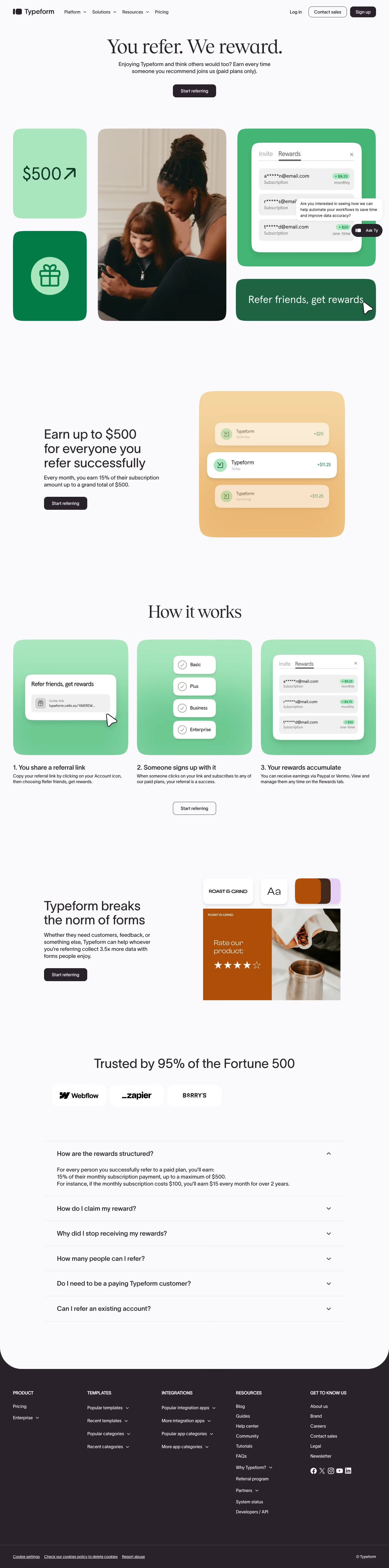
Typeform frames the whole thing as a referral rather than an affiliate scheme — "You refer. We reward.", button label "Start referring" — and puts a plain green tile reading "$500 ↗" as the first thing under the headline. The offer resolves two screens later: "Every month, you earn 15% of their subscription amount up to a grand total of $500." The FAQ then does the multiplication for you, which almost nobody bothers with: "if the monthly subscription costs $100, you'll earn $15 every month for over 2 years." It's also the only page here that names two payout rails — "You can receive earnings via Paypal or Venmo" — and one of the few whose product screenshots are of the affiliate's own dashboard, showing real reward rows at +$9.25 monthly and +$20 one-time.
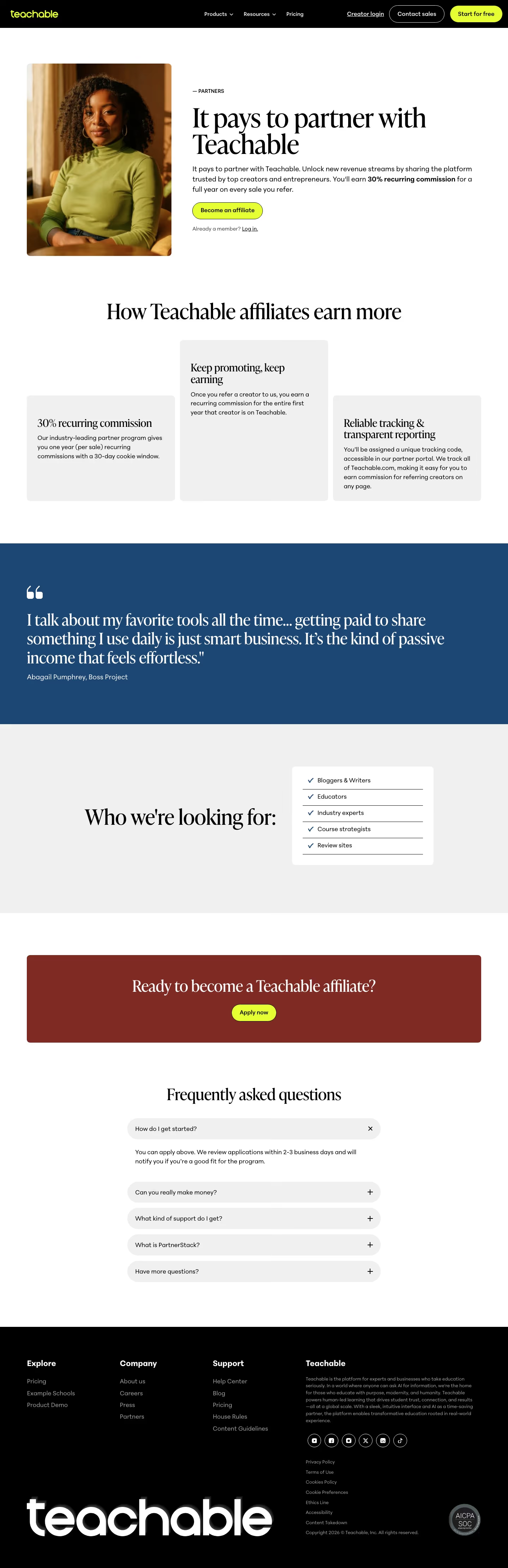
Teachable bolds the terms inside its hero paragraph: "You'll earn 30% recurring commission for a full year on every sale you refer." The first of three cards below repeats it and adds the field almost everyone else drops — "one year (per sale) recurring commissions with a 30-day cookie window" — and the second card exists purely to remove ambiguity about the word recurring: "you earn a recurring commission for the entire first year that creator is on Teachable." The page closes with a "Who we're looking for" checklist (bloggers and writers, educators, industry experts, course strategists, review sites) and an FAQ that commits to a review time: "We review applications within 2-3 business days."
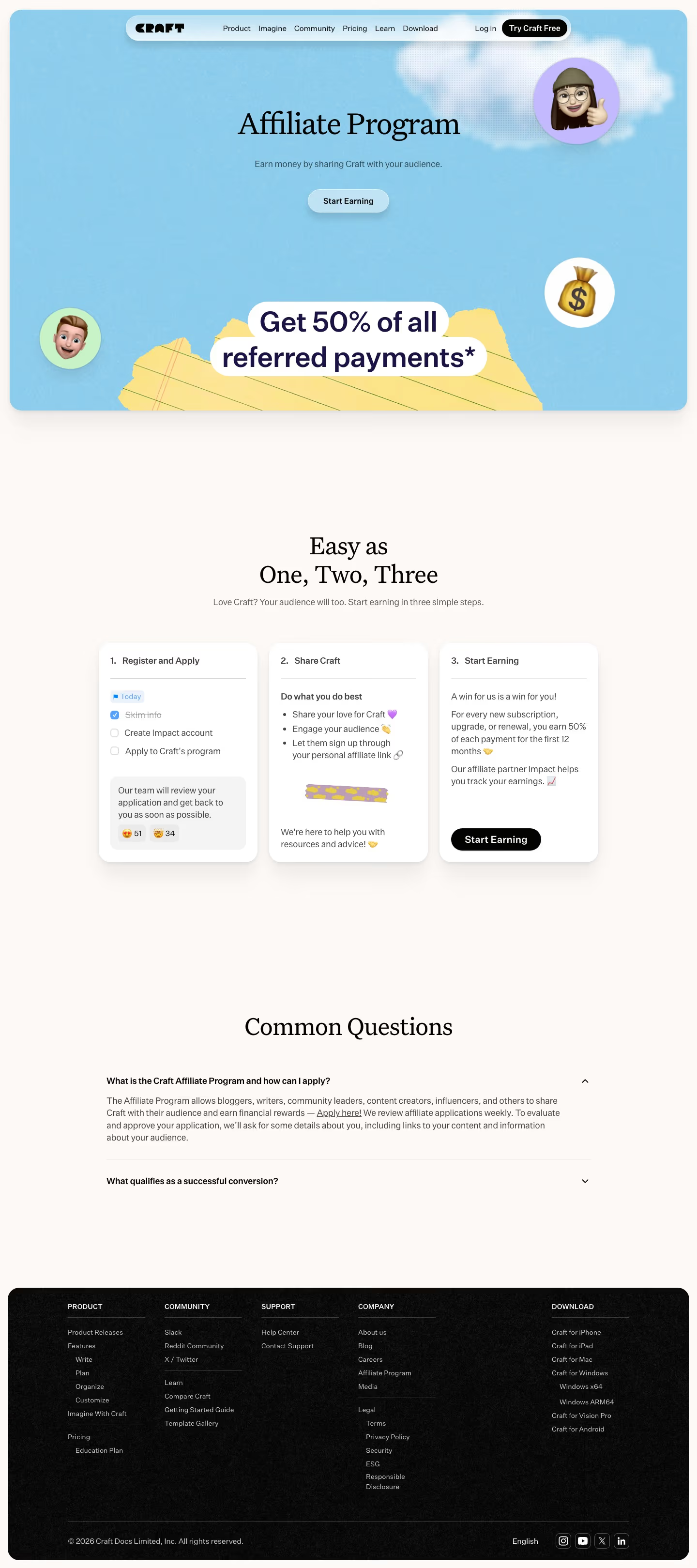
Craft puts "Get 50% of all referred payments*" on a cartoon-blue hero, and the asterisk is honest work: the third of three step cards states the real scope — "For every new subscription, upgrade, or renewal, you earn 50% of each payment for the first 12 months." Half of every payment for a year is the most aggressive percentage on this list, and Craft spends the rest of the page on process rather than persuasion: step one is literally "Create Impact account" then "Apply to Craft's program," and the FAQ commits to a cadence — "We review affiliate applications weekly" — and tells you what the review looks at, "links to your content and information about your audience."
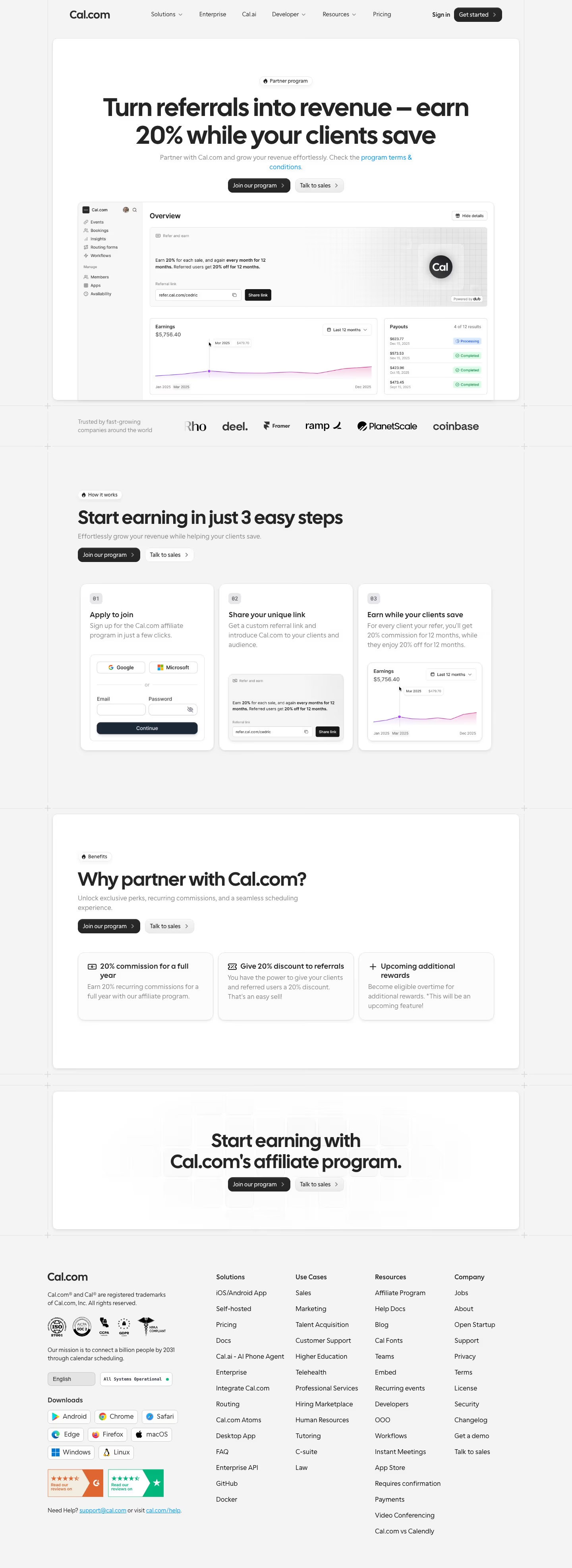
Cal.com is the only page here to put both sides of the deal in the headline: "Turn referrals into revenue — earn 20% while your clients save." The hero screenshot is the affiliate dashboard, carrying the terms as UI copy — "Earn 20% for each sale, and again every month for 12 months. Referred users get 20% off for 12 months" — over an earnings figure of $5,756.40 and four completed payout line items. The benefits row restates it as "20% commission for a full year," and the third card is refreshingly unfinished: "Upcoming additional rewards… This will be an upcoming feature!" The subhead links out to "program terms & conditions," which is the right place for fine print but not for the rate.
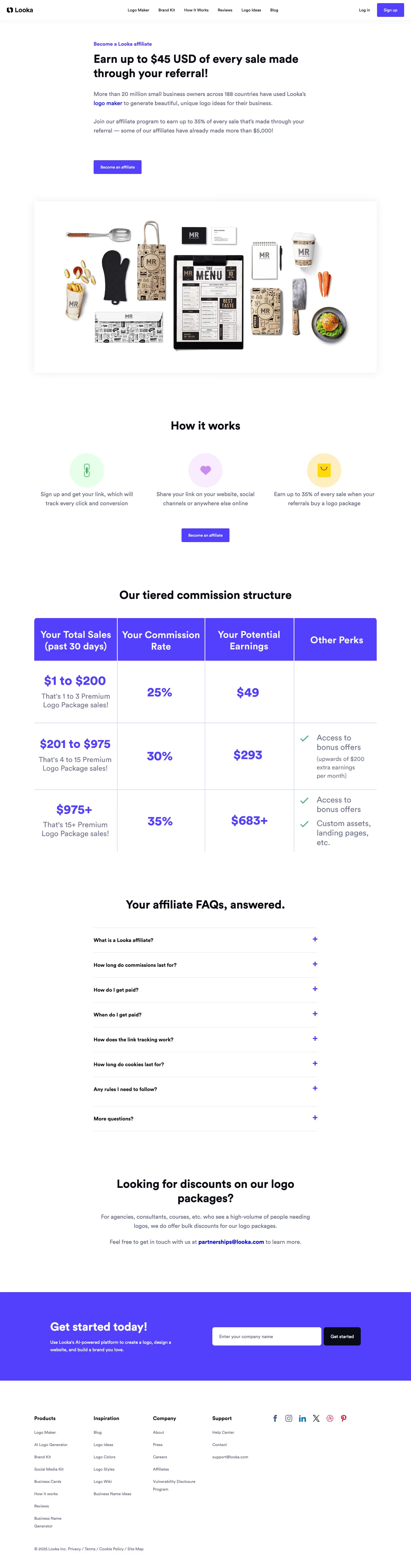
Looka leads with a dollar figure and a percentage in the same breath: "Earn up to $45 USD of every sale made through your referral!" then "earn up to 35% of every sale… some of our affiliates have already made more than $5,000." Its tiered table is the second-clearest in the set and beats Semrush's on one axis — it publishes a worked earnings figure per band, not just a rate. $1 to $200 in trailing-30-day sales pays 25% and is annotated "That's 1 to 3 Premium Logo Package sales!" with $49 in potential earnings; $201 to $975 pays 30% for $293 plus "access to bonus offers (upwards of $200 extra earnings per month)"; $975+ pays 35% for $683+ plus custom assets and landing pages. The one gap is the cookie window, which is a collapsed FAQ row.
Pages that lead with the audience, then pay off
Five pages open by naming who they want rather than what they pay. That works when the number arrives within a screen or two — and three of these five actually publish the more interesting mechanics.
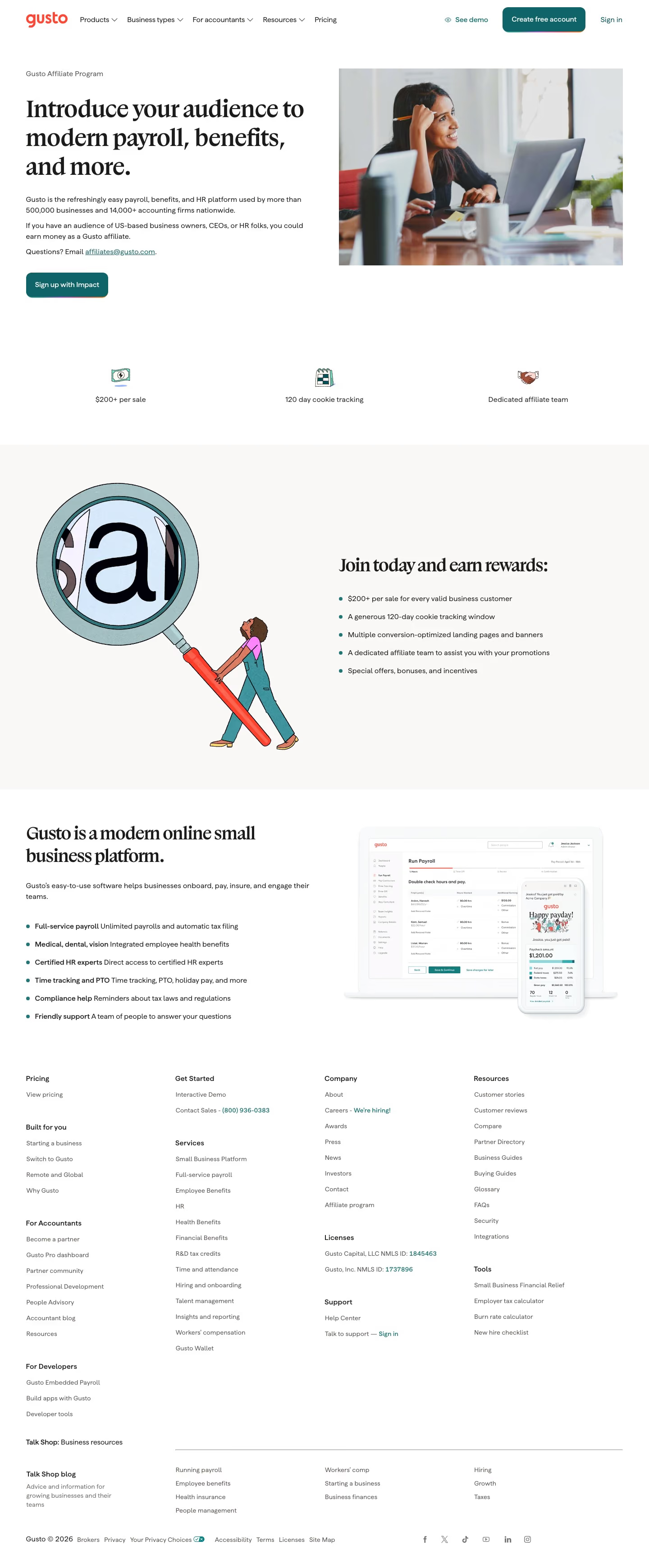
Gusto's page is the shortest here and does its qualifying up front: "If you have an audience of US-based business owners, CEOs, or HR folks, you could earn money as a Gusto affiliate," under a scale claim of "more than 500,000 businesses and 14,000+ accounting firms nationwide." Then three icon stats and that's the whole offer: "$200+ per sale," "120 day cookie tracking," "Dedicated affiliate team." The CTA is labelled "Sign up with Impact" rather than a generic "Apply," so you know the rail before you click, and the page gives a human address — affiliates@gusto.com. The captured page fits in one screen entirely, which is either admirable restraint or an unanswered question about payout timing, depending on how much you already trust Gusto.
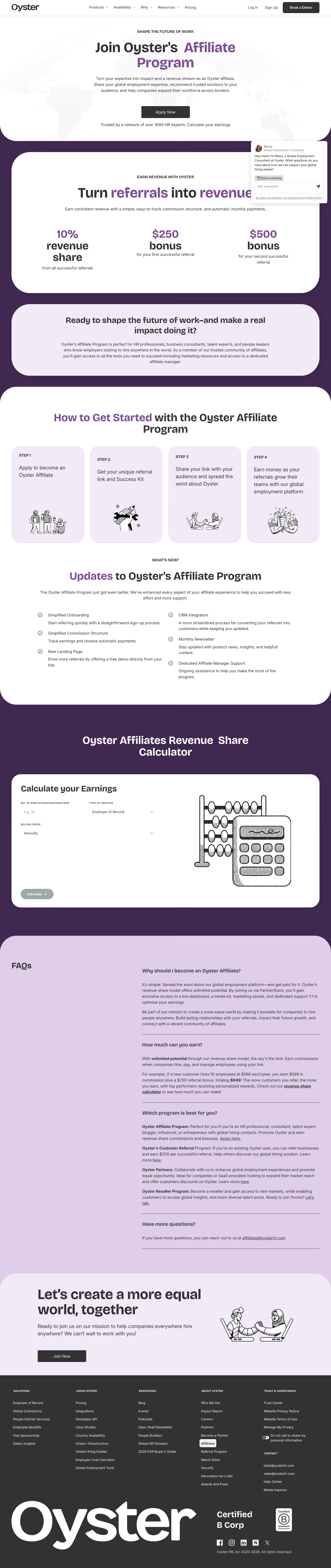
Oyster is the only page in this catalog with an earnings calculator on it. Above it sit three purple figures — "10% revenue share from all successful referrals," "$250 bonus for your first successful referral," "$500 bonus for your second successful referral" — plus the payout cadence in the section subhead, "automatic monthly payments." The calculator takes number of employees or contractors, type of service (Employer of Record) and billing mode, and the FAQ shows the worked example behind it: "if a new customer hires 10 employees at $599 each/year, you earn $599 in commission plus a $250 referral bonus, totaling $849." Its FAQ also does the honest disambiguation that Notion's page skips, splitting four separate programmes — Affiliate, Customer Referral at "$200 per successful referral," Partners and Reseller — so you can tell which one you're actually reading about.
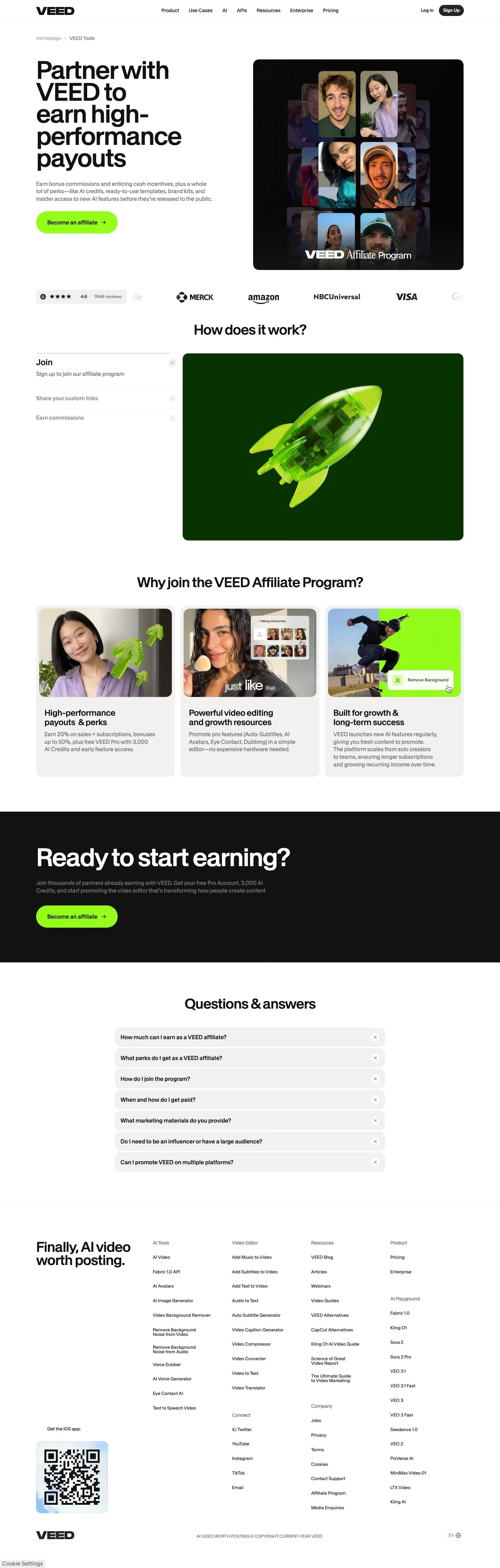
VEED's hero is entirely about the perks — "Earn bonus commissions and enticing cash incentives, plus a whole lot of perks—like AI credits, ready-to-use templates, brand kits, and insider access to new AI features before they're released" — with a grid of creator faces and a Merck, Amazon, NBCUniversal and Visa logo row. The terms show up in the body copy of one card in a three-across benefits row: "Earn 20% on sales + subscriptions, bonuses up to 50%, plus free VEED Pro with 3,000 AI Credits and early feature access." Every remaining question is a collapsed accordion row: "How much can I earn as a VEED affiliate?", "When and how do I get paid?" Both are the right questions and neither is answered in the visible page.
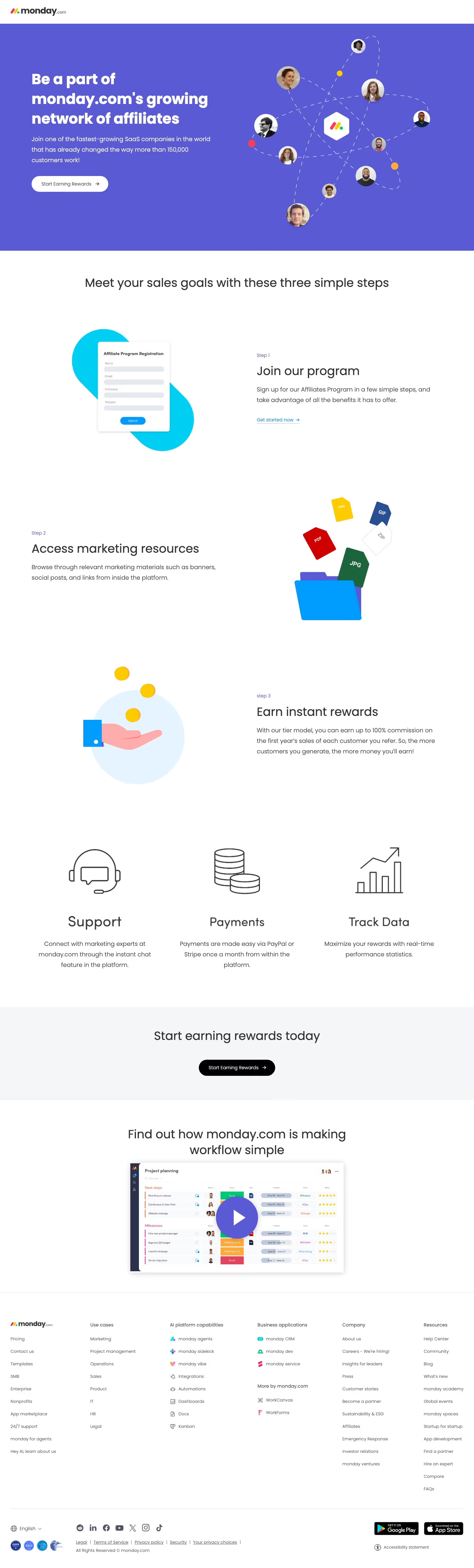
monday.com opens on network scale rather than money — "Be a part of monday.com's growing network of affiliates… more than 150,000 customers" — and reaches the number in step three of three: "With our tier model, you can earn up to 100% commission on the first year's sales of each customer you refer." Up to 100% is the highest figure on this page, and "up to" is doing a great deal of work, because the tier model that determines it is never shown. What the page does publish is the mechanic most pages omit: "Payments are made easy via PayPal or Stripe once a month from within the platform." A rate with no thresholds and a schedule with real detail is an odd trade to make in that direction.
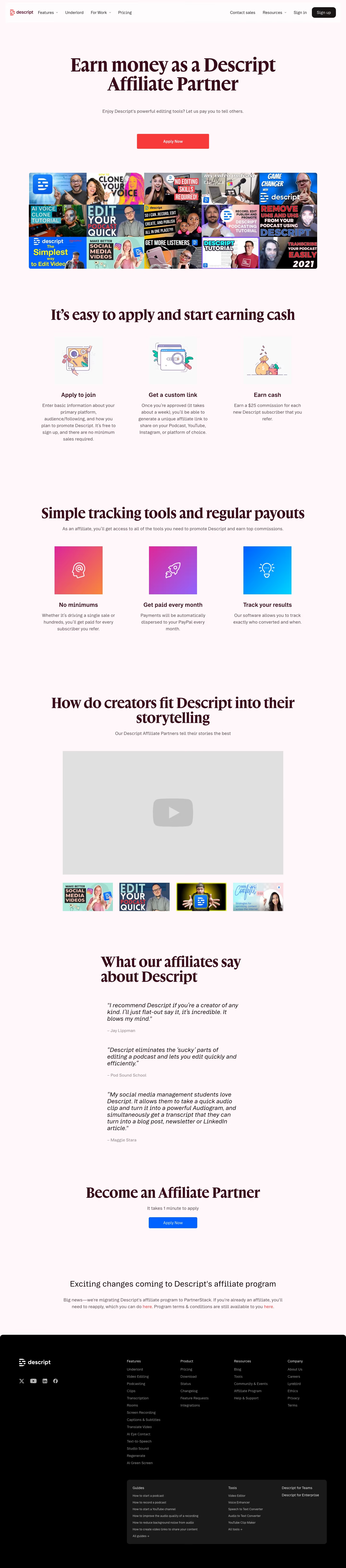
Descript sells the flat rate as a simplicity argument and backs it with three specifics most pages won't commit to: "Earn a $25 commission for each new Descript subscriber that you refer," approval "takes about a week," and "Payments will be automatically dispersed to your PayPal every month." The "No minimums" tile spells out what that means — "Whether it's driving a single sale or hundreds, you'll get paid for every subscriber you refer" — and the closing CTA sets an expectation for the form itself: "It takes 1 minute to apply." The last block on the page is the most useful thing on it: a plain notice that Descript is migrating the programme to PartnerStack and that existing affiliates "need to reapply." That's an awkward thing to publish and exactly the thing a returning affiliate needs to read.
Pages where the payout isn't a percentage of a subscription
Three pages pay for something other than revenue share, and all three are clearer for it.
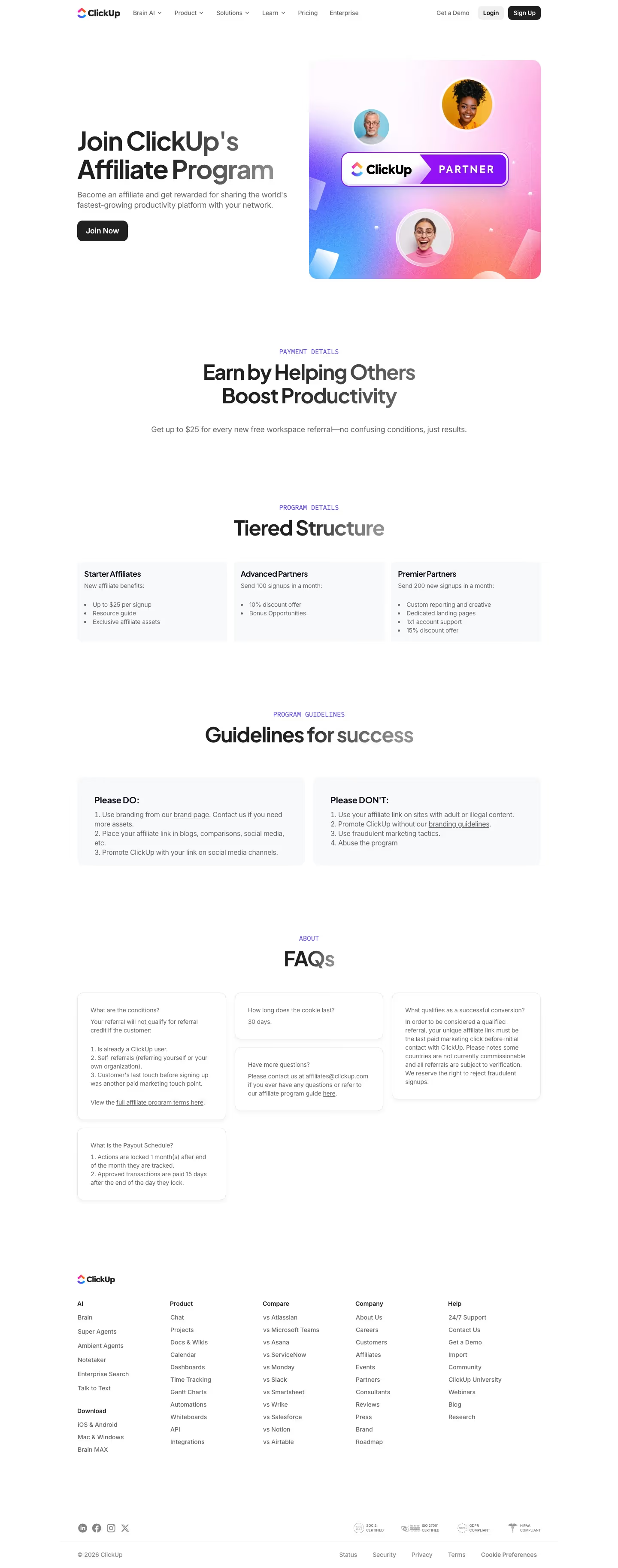
ClickUp pays on signups, not sales: "Get up to $25 for every new free workspace referral—no confusing conditions, just results." Its "Tiered Structure" section publishes the thresholds — Advanced Partners at 100 signups in a month, Premier Partners at 200 — though the rewards at those tiers are discounts, dedicated landing pages and account support rather than a higher rate, so the "up to $25" appears to be the ceiling throughout. The reason it's the third-best-documented page here is the FAQ grid, which publishes the three things that actually get affiliates paid or not: a 30-day cookie, three named disqualifiers ("Is already a ClickUp user", self-referrals, "Customer's last touch before signing up was another paid marketing touch point"), and a payout schedule — "Actions are locked 1 month(s) after end of the month they are tracked. Approved transactions are paid 15 days after the end of the day they lock." No other page in this catalog states when the money moves.
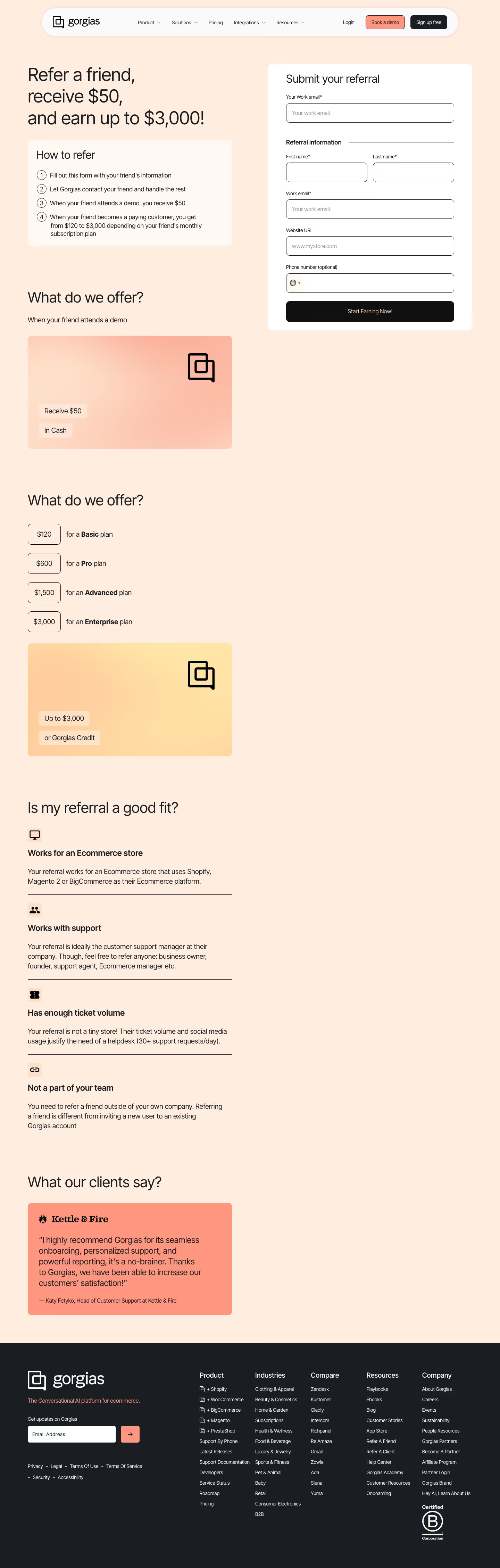
Gorgias runs a two-stage bounty and puts both stages in the H1: "Refer a friend, receive $50, and earn up to $3,000!" The four-step explainer is unusually literal about where the risk sits — "When your friend attends a demo, you receive $50" and then, on conversion, "from $120 to $3,000 depending on your friend's monthly subscription plan" — and the page publishes the whole ladder: $120 Basic, $600 Pro, $1,500 Advanced, $3,000 Enterprise, payable in cash "or Gorgias Credit." It's the only page here that also publishes disqualification criteria for the referral rather than the affiliate: the prospect must run on Shopify, Magento 2 or BigCommerce, must have "30+ support requests/day," and must not be a colleague. Telling a referrer which leads won't pay is more useful than a higher headline rate.
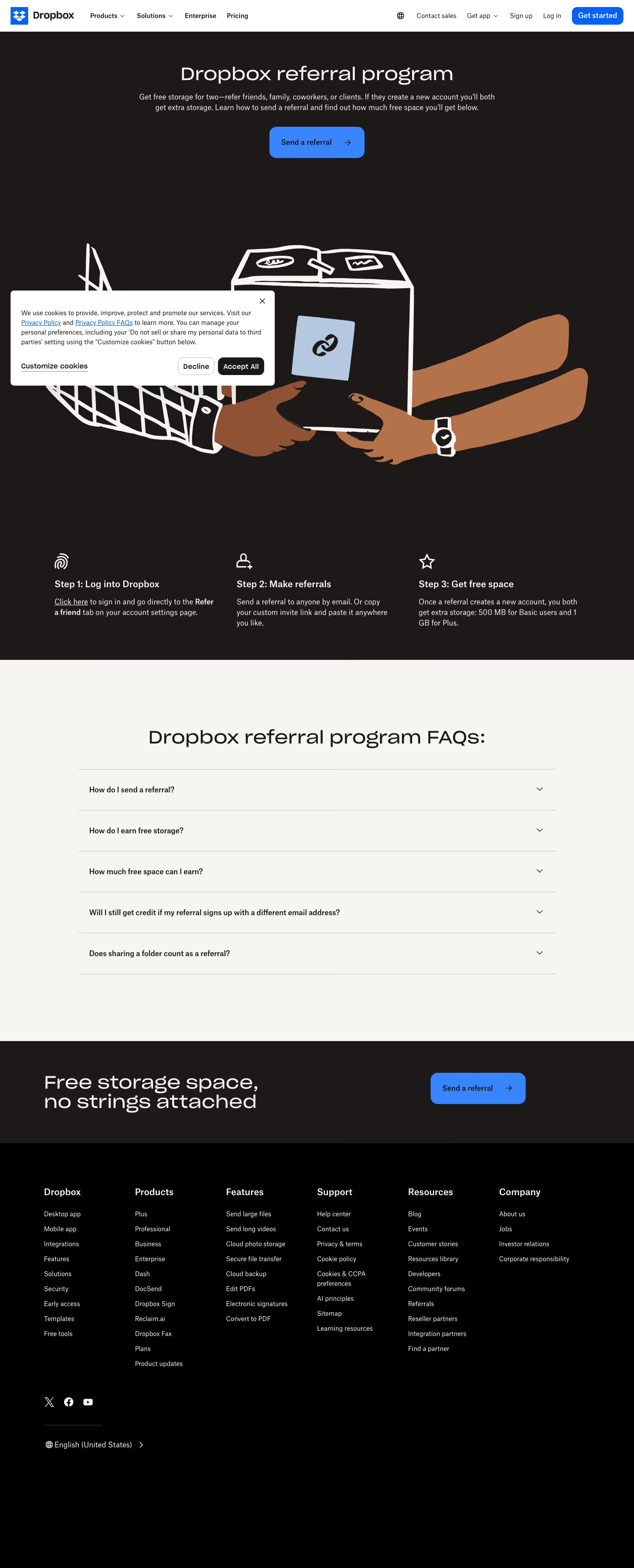
Dropbox's referral page pays in storage and says so in the first line: "Get free storage for two—refer friends, family, coworkers, or clients." The payout is stated exactly, tied to the referrer's own plan: "Once a referral creates a new account, you both get extra storage: 500 MB for Basic users and 1 GB for Plus." Step one is not a marketing step but a navigation instruction — "Click here to sign in and go directly to the Refer a friend tab on your account settings page" — which is the correct design when the programme lives inside the product rather than on an external platform. The closing band, "Free storage space, no strings attached," is the only unsupported claim on an otherwise entirely checkable page.
Pages that ask before they tell
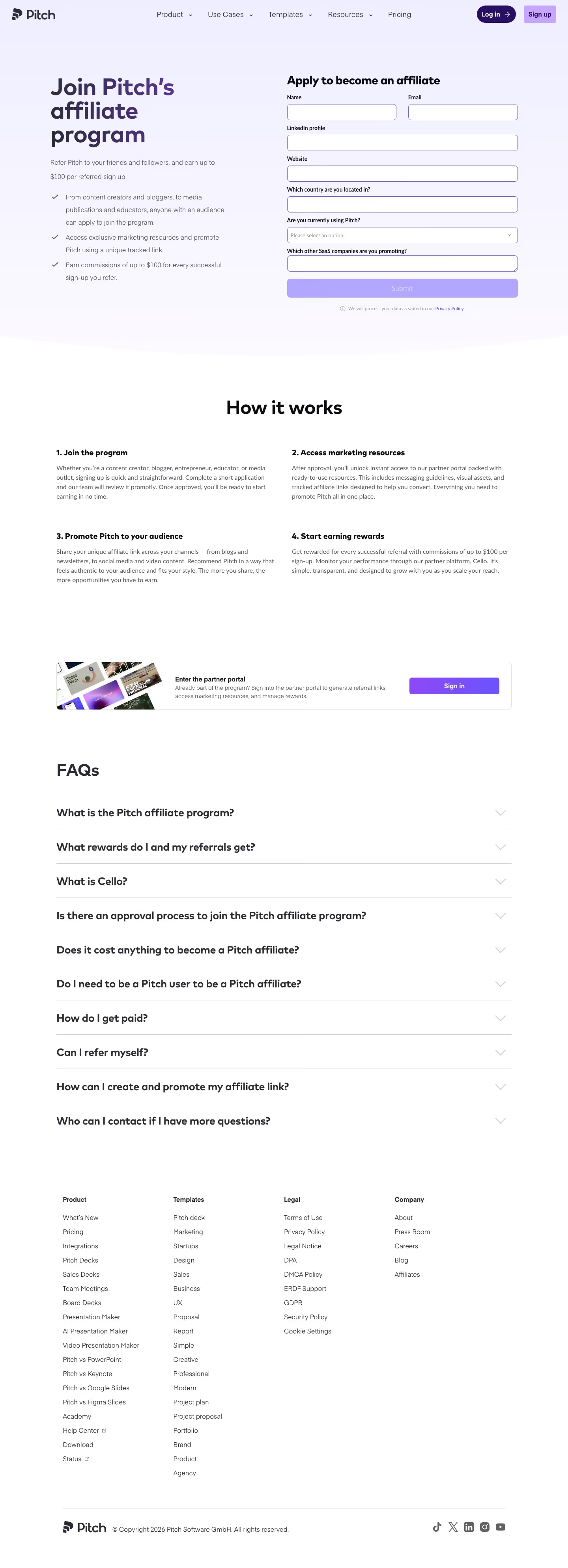
Pitch is one of two pages here that puts the application form in the hero, and it gets the order right: the left column states "earn up to $100 per referred sign up" and lists who can apply before the right column asks for anything. The form itself is seven fields, two of which are qualifying rather than administrative — "Are you currently using Pitch?" and "Which other SaaS companies are you promoting?" — which tells you this is a reviewed programme, not an open signup. The four-step explainer names the platform ("Monitor your performance through our partner platform, Cello") and there's a separate "Enter the partner portal" strip for existing affiliates, so returning users aren't funnelled back through the application. Everything else — how you get paid, whether you can refer yourself — sits in a ten-row collapsed FAQ.
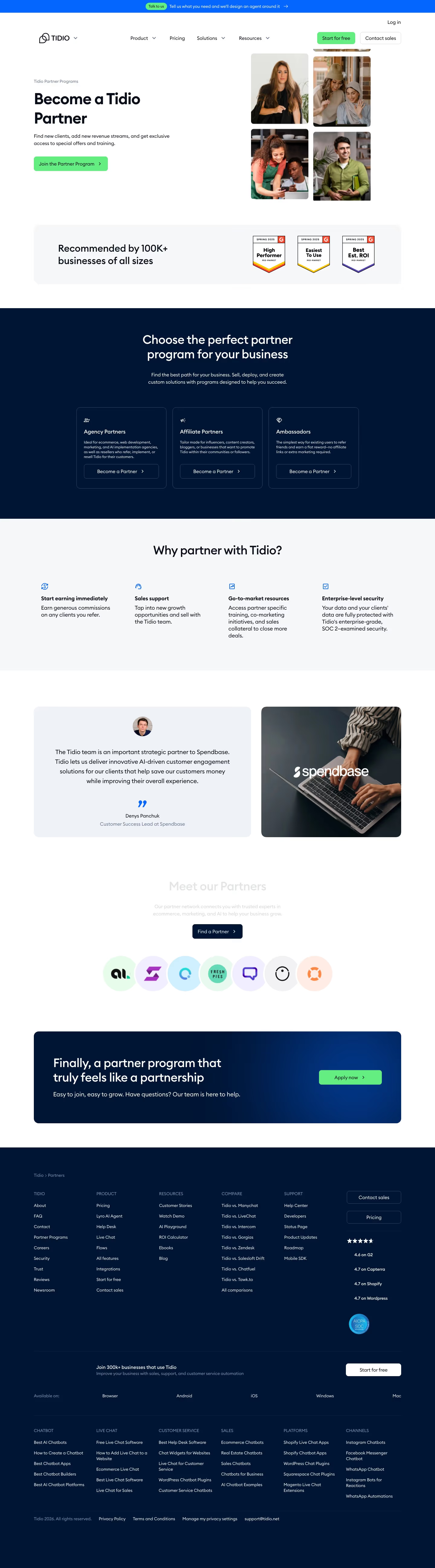
Tidio does the best segmentation job in this catalog and the worst disclosure job. Its "Choose the perfect partner program for your business" section splits three genuinely different audiences — Agency Partners for resellers and implementation agencies, Affiliate Partners "tailor made for influencers, content creators, bloggers," and Ambassadors, "the simplest way for existing users to refer friends and earn a flat reward—no affiliate links or extra marketing required." That third track is a distinction almost no other page here draws. Then the benefits row says "Earn generous commissions on any clients you refer," and that is the only thing the page ever says about money — three well-drawn doors, no prices on any of them.
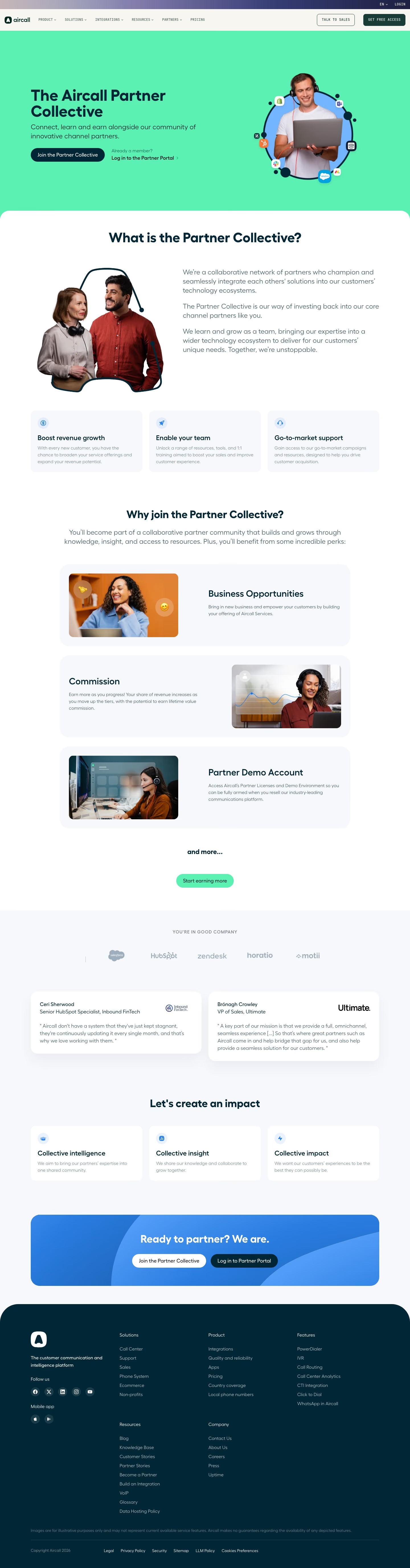
Aircall's "Partner Collective" is a channel programme dressed as a community, and its Commission block is the clearest example in this set of describing a structure without disclosing it: "Earn more as you progress! Your share of revenue increases as you move up the tiers, with the potential to earn lifetime value commission." Every element of a good offer is named — progressive tiers, revenue share, lifetime value — and none is quantified. The rest is genuinely useful for the audience it targets: a partner demo account, 1:1 training, go-to-market campaign access, and a "Log in to the Partner Portal" link beside the join CTA. For a channel partner about to sign a contract, an unquantified page is normal. For the creator who searched "Aircall affiliate," it's a dead end.
Partner pages that aren't affiliate pages at all
Five of the 22 are ecosystem pages. We include them because the catalog files them alongside the affiliate pages, and because if you're building one of these it's worth knowing which of the two things you're building.
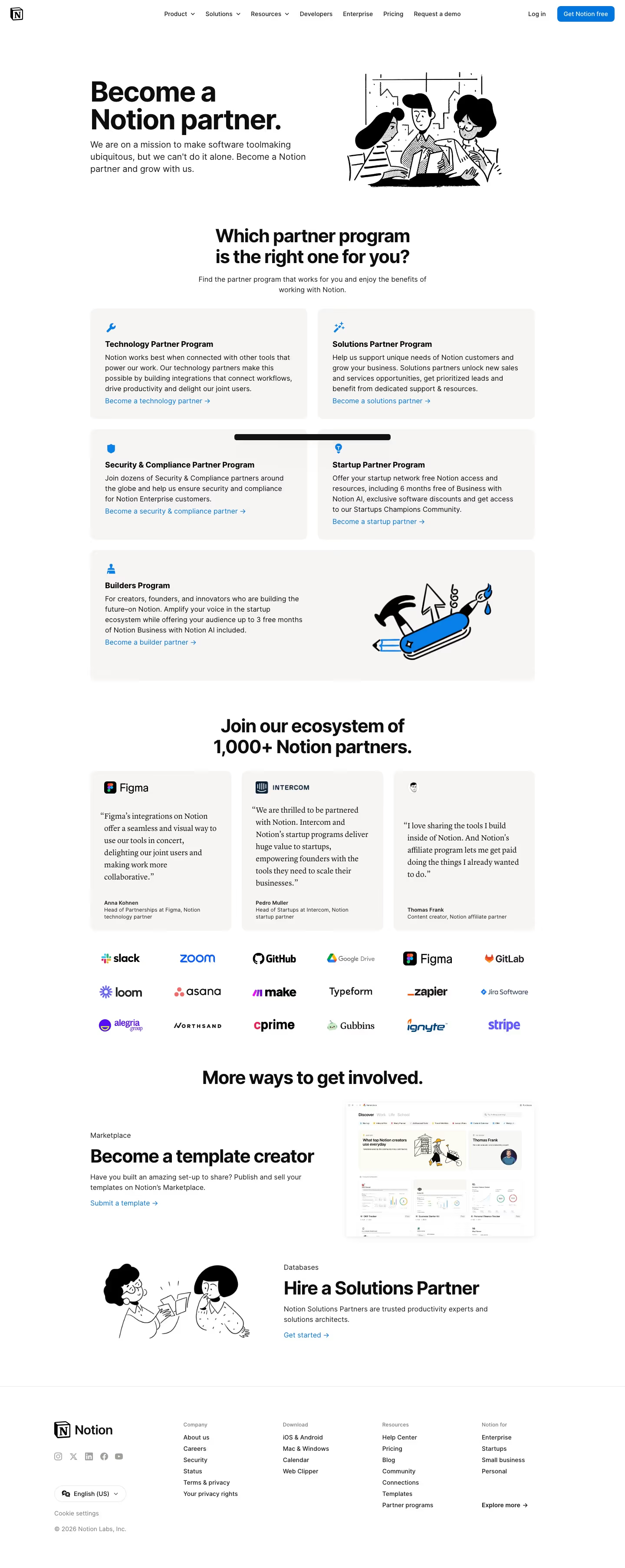
Notion's partner page offers five programmes — Technology, Solutions, Security & Compliance, Startup and Builders — and the two aimed at creators publish what you give, not what you get: the Startup program lets you offer your network "6 months free of Business with Notion AI," the Builders Program "up to 3 months of Notion Business with Notion AI included." It claims "1,000+ Notion partners" over an 18-logo grid. The affiliate programme is referenced exactly once, inside a testimonial: Thomas Frank, labelled "Content creator, Notion affiliate partner," saying "Notion's affiliate program lets me get paid doing the things I already wanted to do." A named affiliate endorsing a programme the page never describes is a strange place to land.
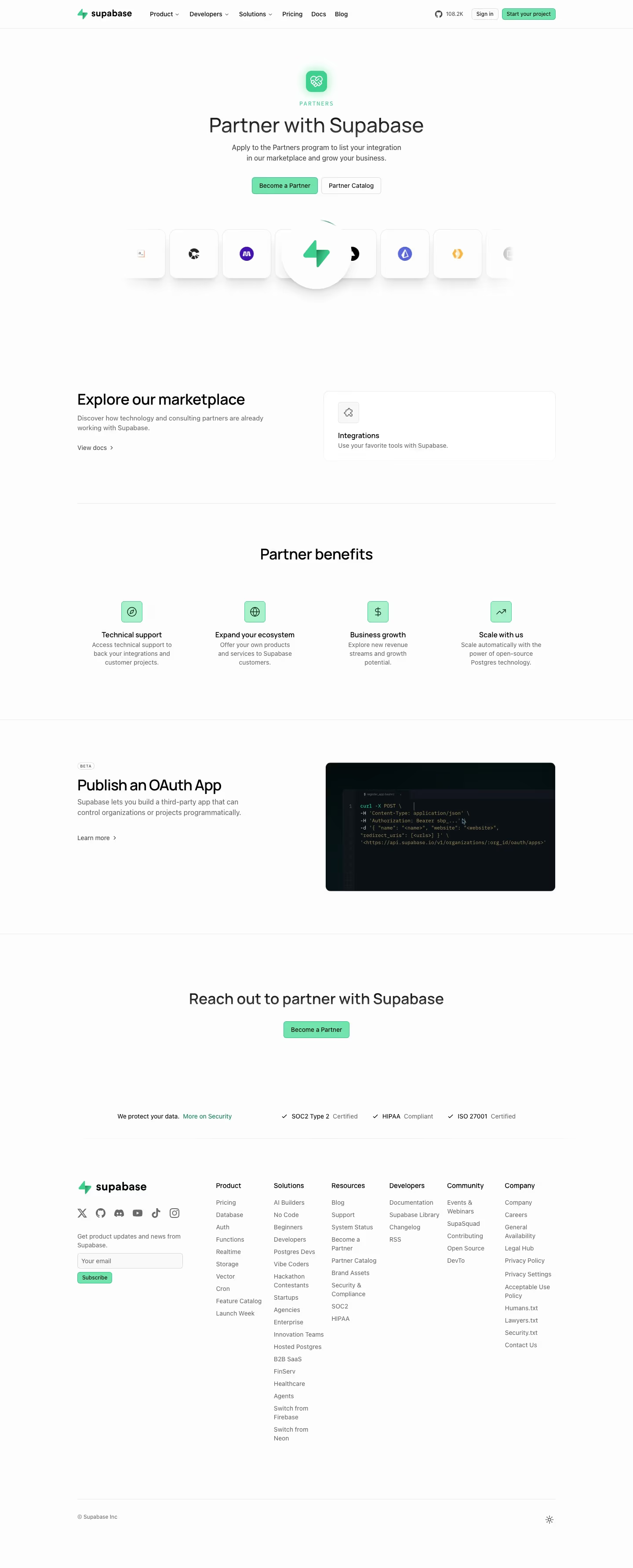
Supabase's page is honest about being something else entirely from the subhead down: "Apply to the Partners program to list your integration in our marketplace and grow your business." The four partner benefits are Technical support, Expand your ecosystem, Business growth — "Explore new revenue streams and growth potential," which is the whole of what it says about money — and Scale with us. What it publishes instead of terms is technical: an OAuth app publishing flow marked BETA, a marketplace catalog link, and SOC2 Type 2, HIPAA and ISO 27001 badges above the footer. For an integration partner deciding whether to build, that's the relevant disclosure set. Nobody should arrive here expecting a rate.
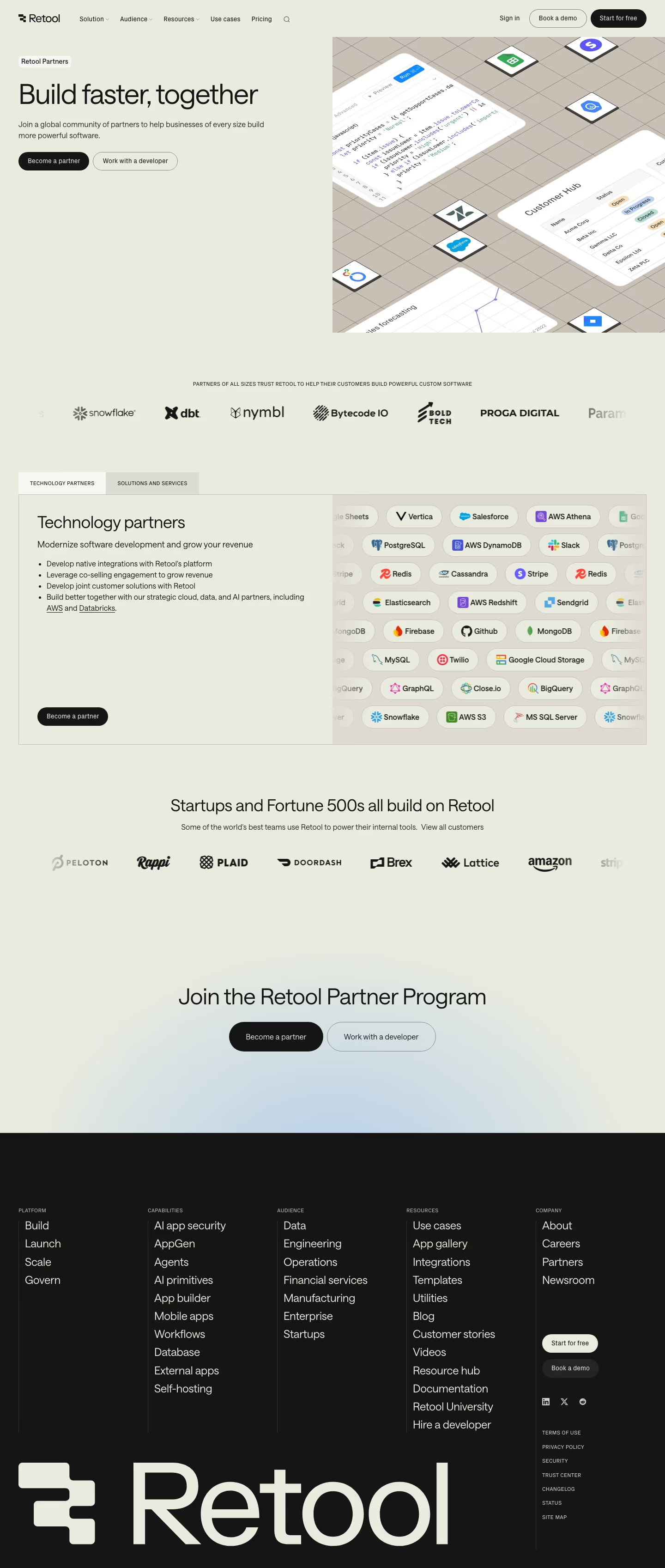
Retool's partner page splits into two tabs, Technology Partners and Solutions and Services, and the technology side lists what a partner does rather than earns: "Develop native integrations with Retool's platform," "Leverage co-selling engagement to grow revenue," and build alongside "our strategic cloud, data, and AI partners, including AWS and Databricks." Its credibility layer is a customer logo wall — Peloton, Rappi, Plaid, DoorDash, Brex, Amazon, Stripe — plus a partner wall including Snowflake and dbt, which is the right argument for an agency weighing whether Retool work exists. The word "commission" never appears.
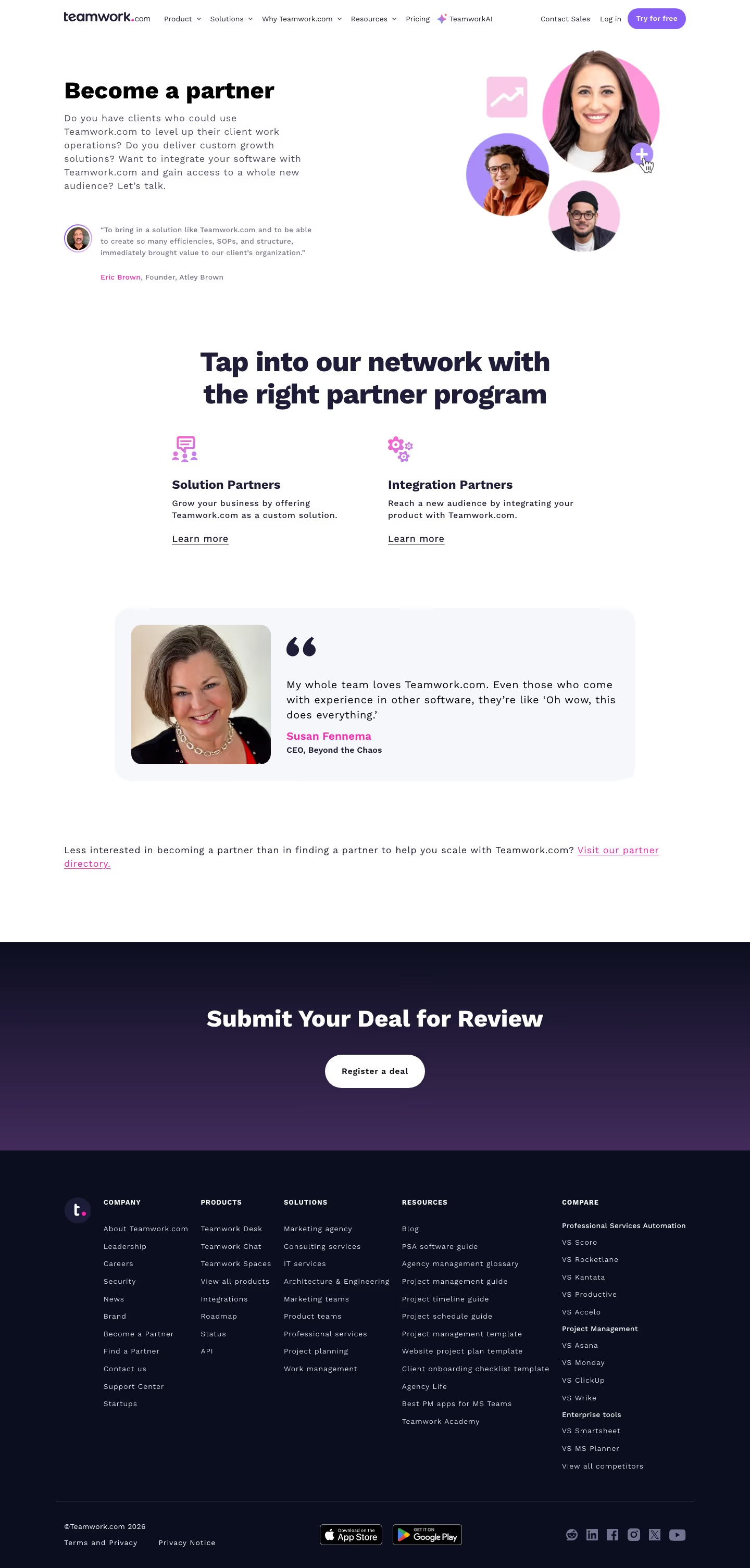
Teamwork.com writes its hero as three questions and a hand-off: "Do you have clients who could use Teamwork.com to level up their client work operations? … Want to integrate your software with Teamwork.com and gain access to a whole new audience? Let's talk." Two tracks follow, Solution Partners and Integration Partners, each a paragraph and a "Learn more" link. Its most concrete element is the closing band, "Submit Your Deal for Review," with a "Register a deal" button — deal registration is a reseller mechanic, and its presence is the clearest signal available that this page is not for affiliates. The page also does the courteous thing almost nobody does and redirects the wrong audience: "Less interested in becoming a partner than in finding a partner to help you scale with Teamwork.com? Visit our partner directory."
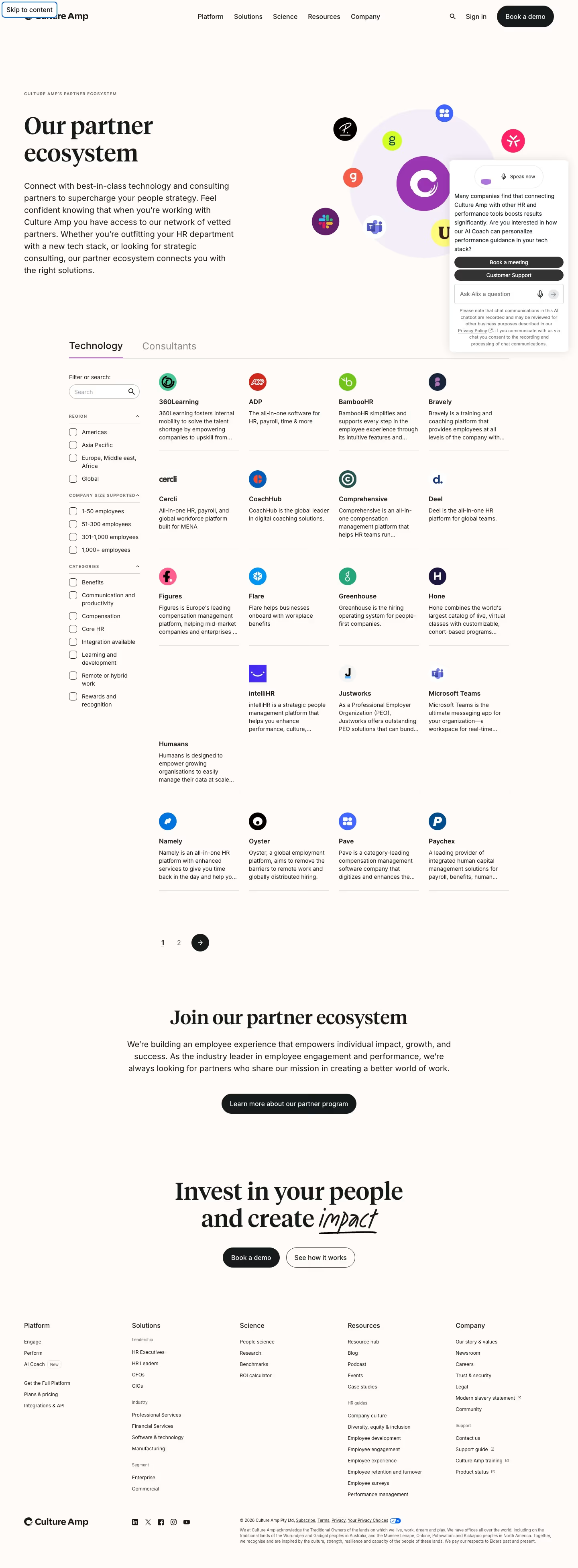
Culture Amp inverts the format completely: its partner page is mostly a directory of other companies. Technology and Consultants tabs sit above a filterable grid — filters for region, company size supported (1–50 through 1,000+ employees) and eight categories including Compensation, Core HR and Rewards and recognition — listing 20 vendors per page across two pages, among them ADP, BambooHR, Greenhouse, Deel, Paychex and Oyster, which is itself an affiliate page in this set. Only after all of that does a small "Join our partner ecosystem" block appear with one "Learn more about our partner program" link. This is a buyer-facing page wearing a partner page's name, and the furthest of the 22 from anything an affiliate can act on.
What the strong pages have in common
Rank these 22 by how much a prospective affiliate learns without clicking, and the top five are Semrush, Looka, ClickUp, Teachable and Oyster. Four traits separate them from the rest, and none is a design decision.
They state the number before they state the pitch. Semrush, Teachable, Craft, Looka and Cal.com all put a rate in the first screen or the first content block. Fifteen of the 22 publish a rate somewhere; the five strongest publish it early. When the rate arrives in step three of a three-step explainer — monday.com — or in the body copy of a benefits card — VEED — the reader has to hunt for the fact they came for.
They answer the second-order questions, not just the rate. Teachable publishes a cookie window and a review turnaround; ClickUp publishes a window, three disqualifiers and a lock-to-payment schedule; Descript publishes an approval time, a payment rail and a monthly cadence; Oyster publishes cadence and a worked calculation. Across all 22, five name a payment rail or schedule (Typeform, monday.com, Descript, ClickUp, Oyster) and four name a cookie window. Those two fields are where the set is thinnest and where the gap is cheapest to close.
They publish a rate for every tier, or they don't claim tiers. Five pages present a tiered structure. Semrush and Looka publish a rate for every band. ClickUp publishes thresholds but non-monetary benefits. monday.com says "tier model" and shows nothing. Aircall describes progression through tiers in a full sentence containing no figures. "Up to 100%" and "your share of revenue increases as you move up the tiers" are the same claim as "we pay well," and readers discount both equally.
They tell you what won't pay. Only three pages publish exclusions: ClickUp's three disqualifiers, Gorgias's four referral-fit criteria, and Typeform's parenthetical "(paid plans only)" in the hero subhead. Those are the three pages where you can predict, before applying, whether your audience converts. Every other page's silence on the point is a cost the affiliate discovers after doing the work.
How to structure your own affiliate page
Everything below is what the 22 pages in this set do, in the order the best of them do it.
Put the commission in the H1 or immediately under it, with the qualifier attached. Teachable's "You'll earn 30% recurring commission for a full year on every sale you refer" and Gorgias's "Refer a friend, receive $50, and earn up to $3,000!" both survive being read out of context, because the number and its scope travel together. Craft's asterisk on "Get 50% of all referred payments*" is the model for a headline that overstates slightly: use the asterisk, then actually resolve it on the page.
Put the hard facts in one block. Gusto's page is three icons — "$200+ per sale," "120 day cookie tracking," "Dedicated affiliate team" — and it out-discloses pages five times its length. The pattern to copy is that block with a fourth tile for the payout schedule, which no page in this catalog manages to include in the same module.
If you have tiers, publish the grid. Semrush's four-column table and Looka's three-band table are the two best assets in this set, and Looka's worked earnings figure per band ($49, $293, $683+) is the single most persuasive thing any of these 22 pages does. If you can't publish a rate per tier, don't say "tier model" — say the one number you can stand behind.
Name the platform and the review process. Eight pages name PartnerStack, Impact, Cello or Dub, and the good ones pair it with a commitment: Teachable's "2-3 business days," Craft's weekly review, Descript's "it takes about a week." An affiliate choosing between five programmes will pick the one that told them when they'd hear back.
State the exclusions. ClickUp's disqualifier list and Gorgias's referral-fit criteria read as friction and function as filtering. They stop the wrong applicants and make the rest of the page more credible, which is the same reason honest constraint works on a pricing page.
Decide whether you're writing an affiliate page or a partner page, and title it accordingly. Seven of these 22 are ecosystem pages with no commission terms, and every one of them is a fine page for its actual audience. The failure mode is Notion's: a five-programme partner hub whose only mention of the affiliate programme is a creator's testimonial. If you run both, do what Oyster does and split them explicitly — its FAQ names four programmes and tells you which is which in a paragraph each. And if the affiliate programme is a footnote on a partner page, at least link it from the footer the way Gorgias, Looka and Craft all do, so the people searching for it can find it.
Browse the rest of the affiliate page hub for the remaining captures in this catalog, or the marketing category, where the pages that publish the most complete terms tend to cluster.
At a glance
| Site | Category | Stack |
|---|---|---|
| Semrush | Marketing | Svelte |
| Typeform | Marketing | Webflow |
| Teachable | Finance & Commerce | Webflow |
| Craft | Productivity & Collaboration | Next.js, Tailwind CSS |
| Cal | Productivity & Collaboration | Framer |
| Looka | Design & Creative | WordPress |
| Gusto | People & Culture | Next.js |
| Oysterhr | People & Culture | Webflow |
| Veed | Design & Creative | Next.js, Tailwind CSS |
| Monday | Productivity & Collaboration | Webflow |
| Descript | Productivity & Collaboration | Next.js, Tailwind CSS |
| Clickup | Productivity & Collaboration | Next.js |
| Gorgias | Sales & Support | Webflow |
| Dropbox | Productivity & Collaboration | — |
| Pitch | Productivity & Collaboration | Framer |
| Tidio | Sales & Support | Next.js, CSS-in-JS |
| Aircall | Sales & Support | Next.js |
| Notion | Productivity & Collaboration | Next.js, Tailwind CSS |
| Supabase | Engineering & Infrastructure | Next.js, Tailwind CSS |
| Retool | Engineering & Infrastructure | Next.js, Tailwind CSS |
| Teamwork | Productivity & Collaboration | Nuxt, Vue |
| Cultureamp | People & Culture | Tailwind CSS |
Frequently asked
What should a SaaS affiliate program page actually disclose?
Judging by the 22 pages reviewed here, the four facts a prospective affiliate needs are the commission figure, whether it recurs and for how long, the cookie window, and the payout schedule. Only Semrush, Teachable and ClickUp state three or more of those four on the page itself. Fifteen of the 22 state a commission figure; four state a cookie window; five name a payment rail or schedule; none state a minimum payout threshold.
Do SaaS affiliate programs usually pay recurring or one-time commissions?
Both are common in this set, and the recurring ones are almost always time-bounded rather than lifetime. Teachable pays 30% for a creator's first year, Craft pays 50% of each payment for the first 12 months, Cal.com pays 20% for 12 months, and monday.com advertises up to 100% of a customer's first-year sales. Typeform is the exception that recurs monthly with no end date but a $500 total cap. Flat one-time bounties — Descript's $25, Gusto's $200+, Pitch's up to $100 — are the other half of the pattern.
Why do so many SaaS "partner" pages have no commission terms?
Because they are not affiliate pages. Of the 22 pages here, seven — Notion, Supabase, Retool, Teamwork, Culture Amp, Tidio and Aircall — are reseller, integration or services ecosystems where the commercial arrangement is negotiated, not published. Supabase's partner page is about listing an integration in a marketplace; Culture Amp's is a filterable directory of 20-plus vendors. If you land on one of these expecting a rate card, the page is working as intended and you are on the wrong page.
Which affiliate pages in this catalog publish the most complete terms?
Semrush's is the most complete by a wide margin: a 120-day cookie window, a per-product commission grid ($300 for Semrush One down to $50 for the Local and Social toolkits), $10 per free trial, and a four-tier loyalty table keyed to sales per quarter with a rate in every cell. Looka is second, with a three-band table showing the commission rate, the trailing-30-day sales threshold and a worked earnings figure for each band. ClickUp is third and the only one to publish its payout lock schedule.
Should the affiliate application form go on the page or behind a button?
Only two of the 22 put the form on the page: Pitch, which runs a seven-field application in the right half of its hero, and Gorgias, which puts a referral-submission form there instead. Both pages state their headline number in the left column before the form, which is the sequence that matters. The 15 pages that state a rate and then link out to Impact, PartnerStack or Cello are answering the same question in a different order — the failure case is the page that shows a form or a button without any number nearby.
Related reading
8 Real SaaS Pricing Pages, and the Patterns Actually Worth Copying
A close look at how Notion, Sentry, Semrush, Superhuman, Gusto, Tailscale, Ramp and ElevenLabs actually structure their pricing pages — not generic pricing-page advice, but what's really on each page and why it works.
SaaS Footer Design: What 12 Real Examples Include (and Skip)
ReadMe's footer is a logo and three links. Tidio's is a three-tier mega-footer with SEO comparison pages. A real look at how much — or how little — a SaaS footer actually needs.
25 SaaS Contact Us Page Examples, Counted Field by Field
Dropbox's contact form asks for eleven things. Warp's asks for one. We counted the fields, the routes and the published email addresses on 25 real SaaS contact pages — and not one of them promises a response time.