
141 Engineering & Infrastructure SaaS website designs
Developer tools and the cloud, database, observability and compute platforms they run on — the single largest category in the catalog, because building and running software is the thing most of these companies actually sell to engineers.
Sponsored by (opens in new tab)
(opens in new tab)




























About Engineering & Infrastructure
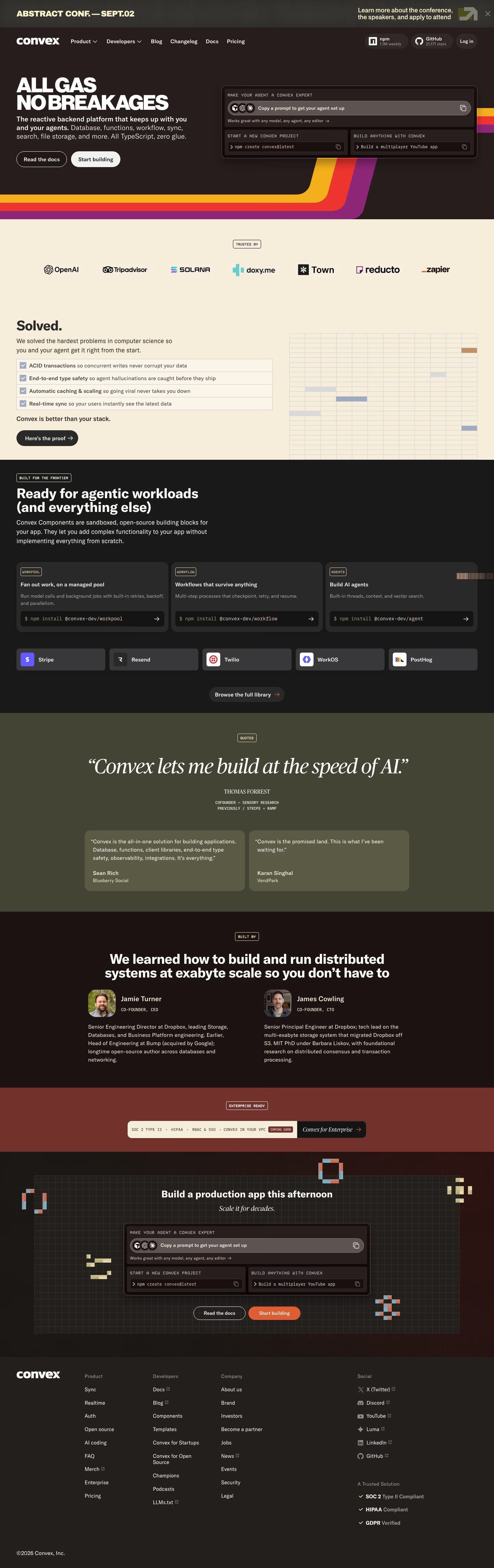
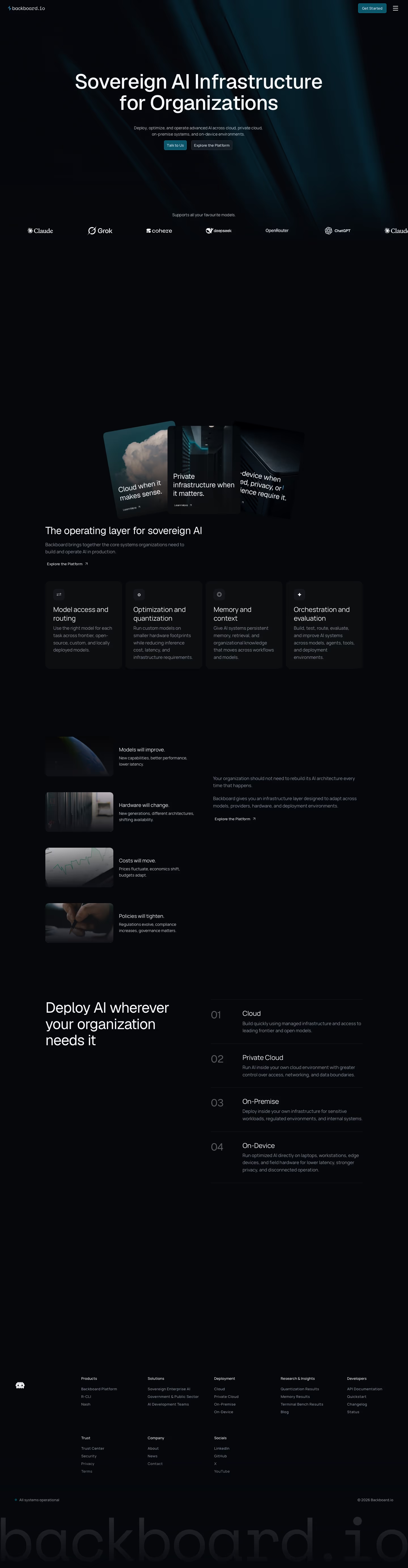
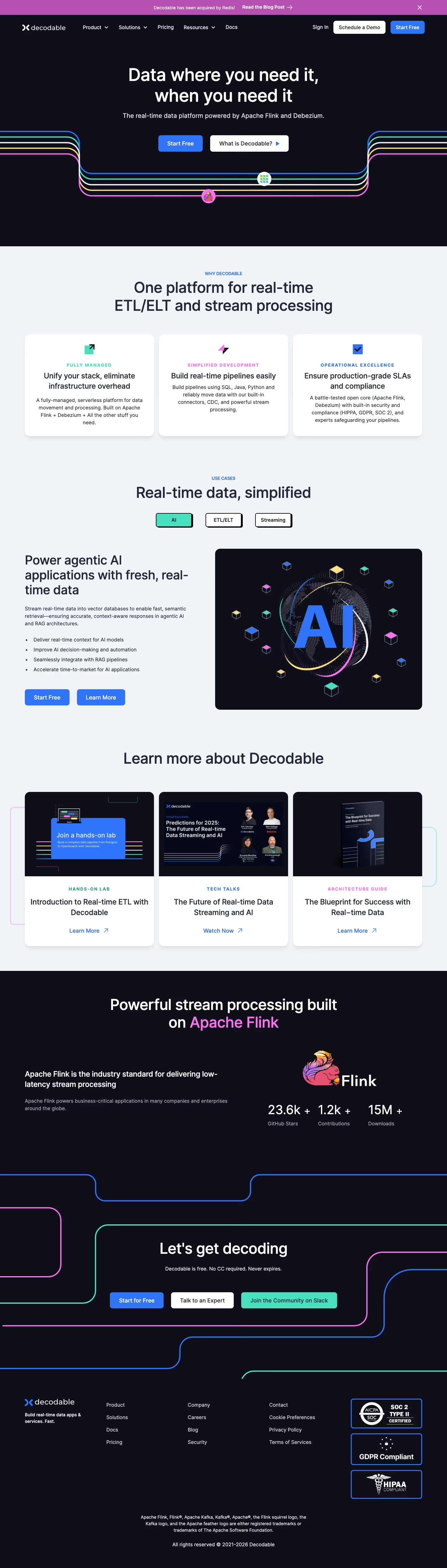
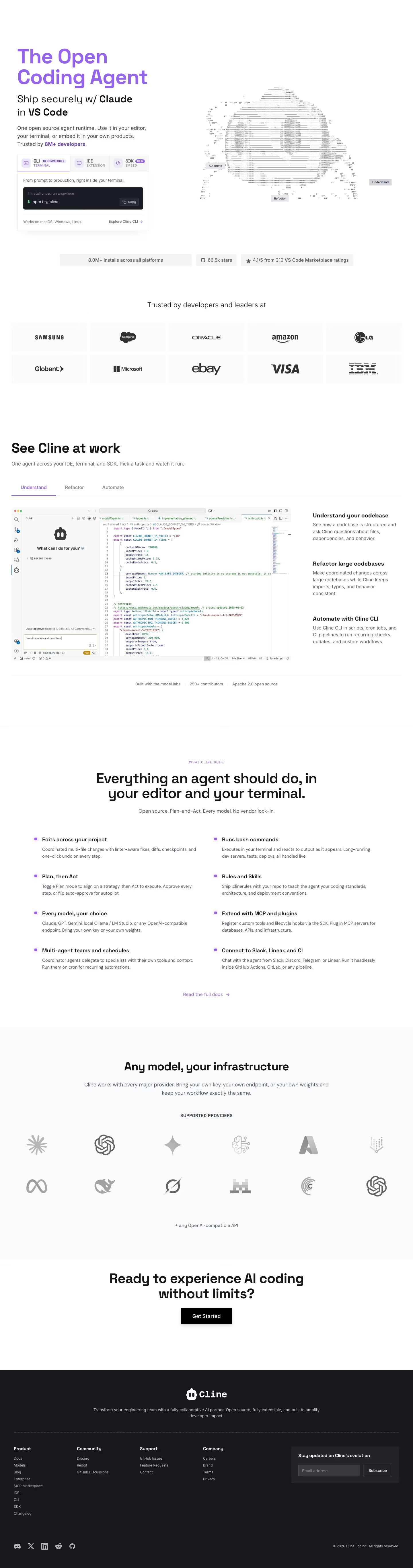
Whether the product is a tool used *in* the development workflow (an editor, a CI pipeline, a code-review agent) or a platform the resulting app runs *on* (a database, a hosting layer, an observability stack), the marketing problem is the same: this audience is unusually resistant to typical marketing language, where vague superlatives ('powerful', 'seamless') actively hurt credibility with engineers trained to distrust claims that aren't backed by something checkable — a code snippet, a benchmark, an uptime number, a link straight to documentation. That's why the strongest examples put a real code sample, terminal output or architecture diagram in the hero itself rather than an abstract illustration, and why 'read the docs' or a GitHub link often sits as a co-equal call-to-action alongside 'sign up' — for this audience, the documentation is frequently a more persuasive sales asset than the marketing copy surrounding it. Dark, terminal-adjacent visual styling is disproportionately common here for the same reason.
What makes a great one
- A real code sample, terminal output, config snippet or API response, not just copy
- A direct link to documentation as a co-equal call-to-action
- Concrete, checkable numbers (uptime, latency) over vague superlatives
From the blog
The 20 Most Popular Fonts for Landing Pages, Actually Counted (374 Sites)
Every "most popular fonts for landing pages" list you have read is a taste ranking with no counts and no sample size. We ran font detection across 374 captured SaaS sites and counted. Inter appears on 112 of them, Geist on 47, and four fonts from the commonly-cited top twenty appear on exactly none.
The 30 Best SaaS Websites in 2026 (Reviewed From Real Screenshots)
Thirty SaaS websites reviewed at equal depth from screenshots we captured ourselves — what's above the fold, the one section each does unusually well, and the stack, palette and typefaces behind it. With a stated selection method, not a handpicked vibe check.
24 Product Landing Page Examples, Measured Fold to Footer
Twenty-four product landing pages read start to finish from our own screenshots — what's in the fold, where the logo strip actually sits, how the page closes, and how long each one really runs, in pixels.
Frequently asked
Why do developer-facing landing pages often show a code snippet or terminal output in the hero?
Because a code sample or a real config snippet is a checkable, concrete claim that a technical audience trusts more than descriptive marketing copy — it shows exactly what using the product looks like rather than describing it abstractly.
Should a developer product link to documentation from the homepage?
Usually yes, and often prominently — for a technical evaluator, the docs are frequently more persuasive than the marketing page itself, since they demonstrate real capability and engineering quality rather than asserting it.