
SaaS Testimonial Sections: What Makes a Quote Actually Convert
Cursor's testimonial wall quotes Jensen Huang and Greg Brockman by name. Sanity's cites Lady Gaga's team. A real look at 12 SaaS testimonial sections and what actually makes a quote feel real instead of boilerplate.
By Derek Paul
Every quote, name and layout detail below is from a real testimonial section captured in BestSaaSWebDesigns' catalog of 400+ real SaaS sites, not quotes gathered from other "best of" roundups. See the full testimonial section hub for the rest.
When the names alone are the proof
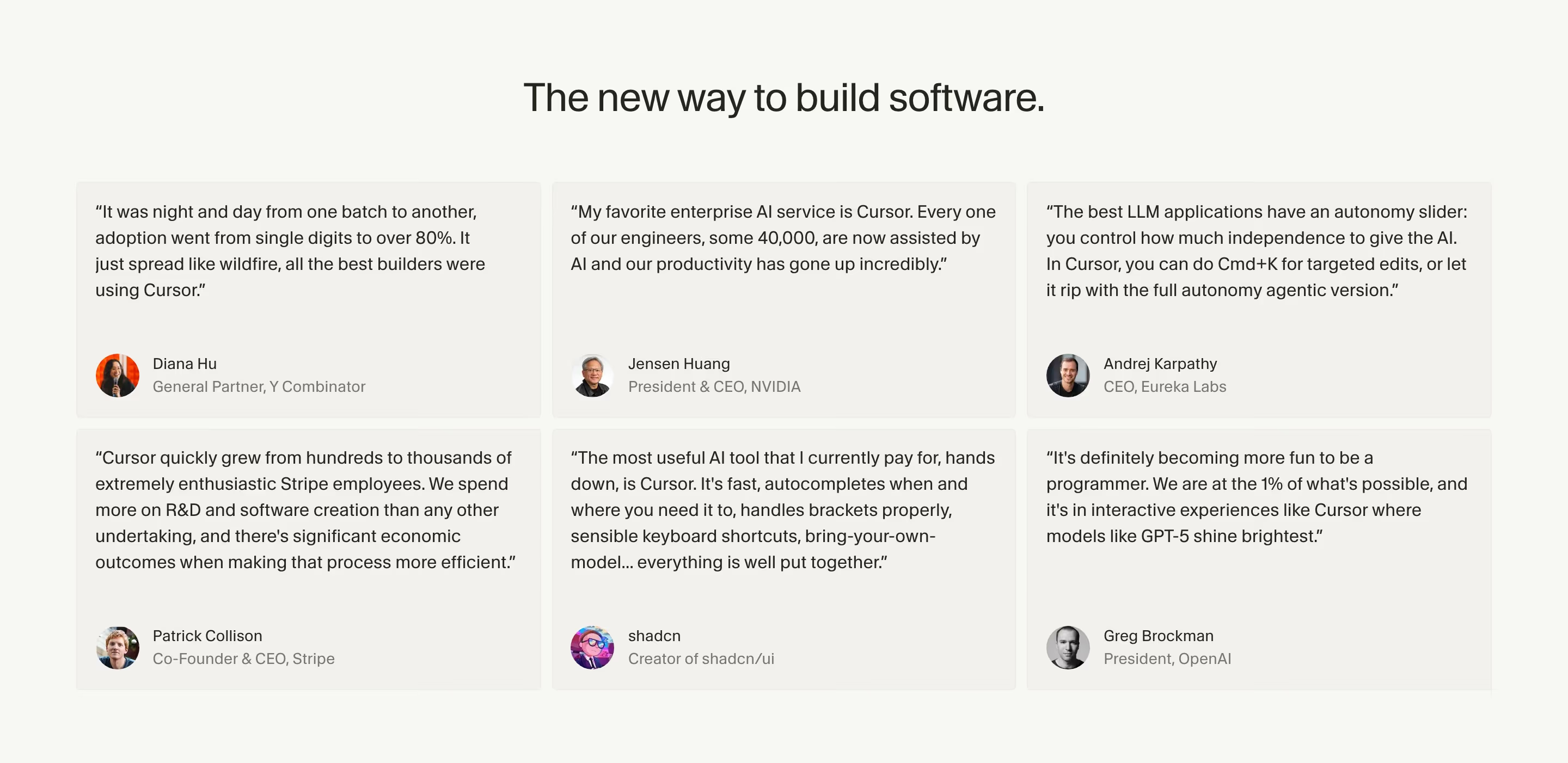
Cursor's testimonial grid, under "The new way to build software," is stacked with quotes from Jensen Huang (President & CEO, NVIDIA), Patrick Collison (Co-Founder & CEO, Stripe), and Greg Brockman (President, OpenAI) — small circular real photos, no company logos, because the names alone carry the entire credibility signal. Sanity goes even further outside typical B2B territory: its dramatic black-and-white photo background frames a pull-quote about Lady Gaga's team logging into Sanity Studio to make their own updates, attributed to a named creative lead, next to quantified stats (300% faster release cycles) and a Tecovas logo.
Stat-first, quote-second

Webflow's testimonial carousel overlays a large stat directly on each full-bleed photo card: "32 — global sites launched in 10 days" (Verifone), "20% — Increase in site-wide conversion" (Lattice, with a named CMO quote underneath), "$6M — in cost savings annually" (Orangetheory Fitness). The number is the headline; the quote is supporting color. Supermemory does something similarly numeric but rawer: a quantified before/after bar chart ("Memory vs RAG" — 12s vs 40s latency) with a giant "40% Fewer tokens" stat sits beside a screenshotted tweet and a named-founder quote from Harshil Mathur of Razorpay — mixing a real embedded social post with a recognizable fintech name.
Developer-tool candor over consumer polish
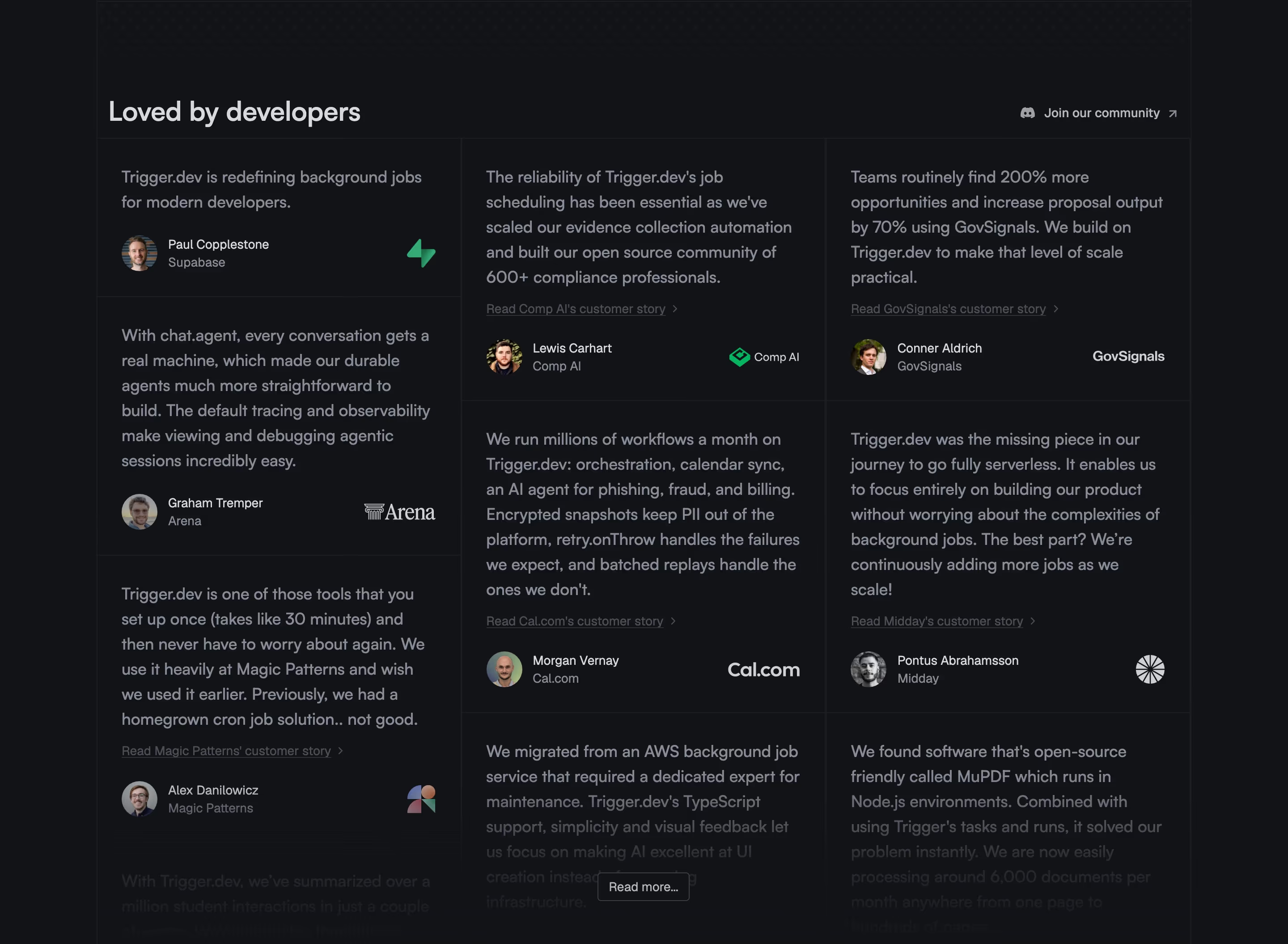
Trigger.dev's dark, masonry-style "Loved by developers" wall quotes named engineers at real, recognizable dev-tool companies — Paul Copplestone at Supabase, Morgan Vernay at Cal.com — with quotes that reference concrete engineering details ("retry.onThrow handles the failures we expect") and specific quantified outcomes ("over a million student interactions in just a couple of weeks"), each linking out to a full customer story. Greptile's blueprint-styled cards push candor further, keeping one real quote's self-censored profanity intact ("the only AI reviewer that doesn't annoy the s**t out of me") from a named CTO — a deliberate authenticity signal for a technical, peer-to-peer audience that would read a fully polished quote as less trustworthy, not more.
Illustration and video instead of the standard photo-plus-quote

Attio replaces photography entirely with hand-drawn, grayscale pencil-sketch portraits, shown as a filmstrip selector next to the active large quote — in this case Railway's Head of Product Marketing, paired with a "Railway's favorite features" tag row connecting the quote to specific product modules. Vanta removes the quote text altogether: four tall, professionally-shot portrait/video-still images (GitHub, DOCGO) carry only a company logo and a name-and-title caption, implying a video testimonial lives behind the card, reinforced by a Forrester Wave "Leader" chart placed right beside it.
The unglamorous, and the case-study mix
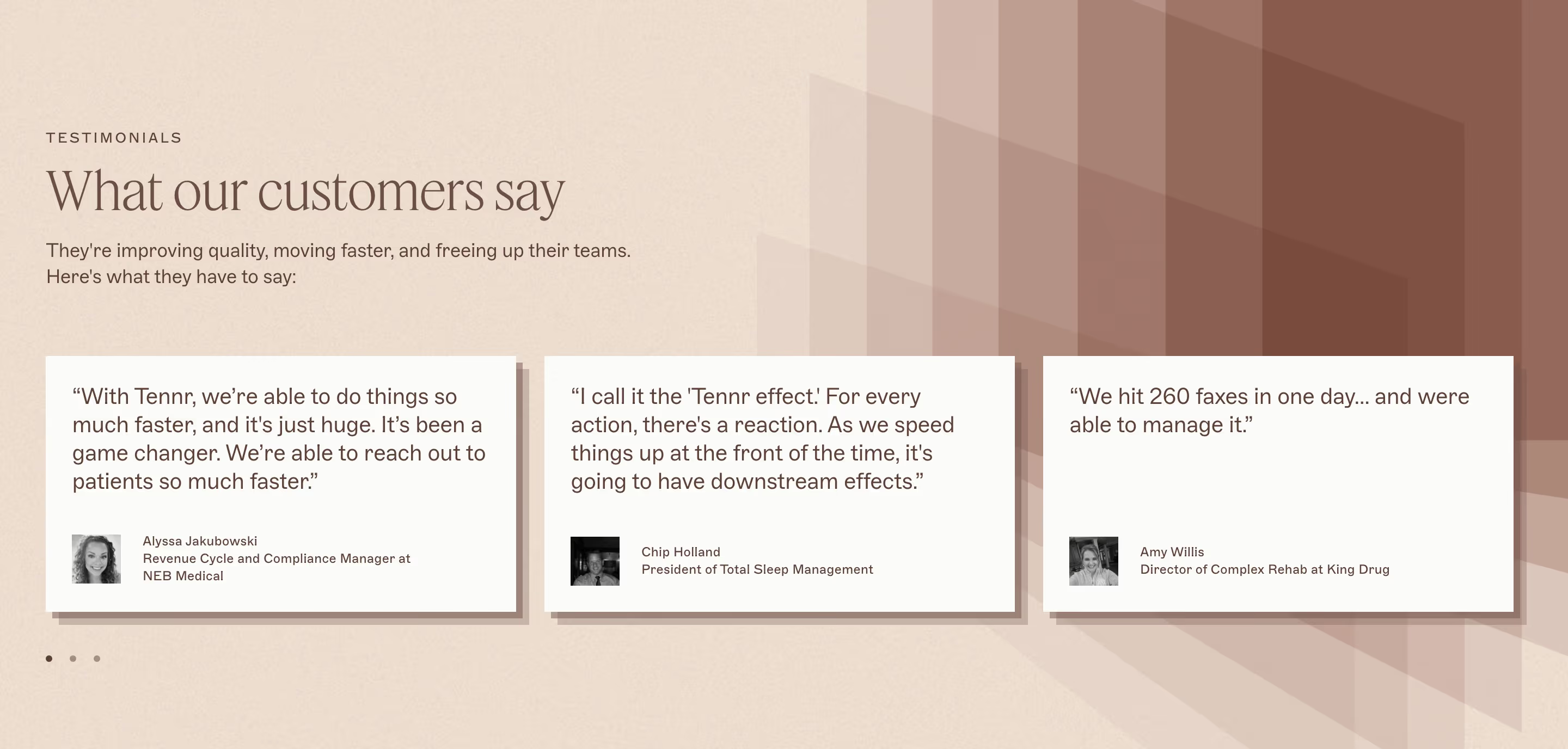
Tennr, a vertical healthcare-ops product, uses plainly-lit real headshots of operations staff at small clinics — Alyssa Jakubowski, Revenue Cycle and Compliance Manager at NEB Medical — with colloquial quotes ("I call it the 'Tennr effect'") and concrete numbers ("We hit 260 faxes in one day"), a deliberately unglamorous contrast to Cursor's celebrity-CEO wall. Descript and Hex both show a real, common mixed-provenance pattern: G2-style abbreviated reviews ("Donna B.", colored letter avatars) sit alongside one fully named, titled case-study pull-quote with a real logo and a "read the full story" link — the abbreviated quotes provide volume, the named one provides depth. Clay's horizontally-scrollable, color-blocked carousel leads with the brand name itself (OpenAI, Vanta, Intercom) as the primary label, with the named, titled speaker underneath — inverting the usual person-first hierarchy.
What the range across these twelve actually shows
Across all twelve, the quotes and formats that read as least boilerplate always tie back to something specific and checkable — a number, a named technical detail, or a recognizable name — rather than generic sentiment. Photography, illustration, and video-only formats all work when the rest of the card still earns trust some other concrete way. See the full testimonial section hub for the rest of this catalog's real examples, or read how logo clouds handle the same trust-building job in a lighter-weight format.
At a glance
| Site | Category | Stack |
|---|---|---|
| Cursor | Engineering & Infrastructure | Next.js, Tailwind CSS |
| Sanity | Engineering & Infrastructure | Astro, Tailwind CSS |
| Webflow | Design & Creative | Webflow |
| Trigger | Engineering & Infrastructure | Remix, Tailwind CSS |
| Attio | Sales & Support | Next.js, Tailwind CSS |
| Vanta | Security | Webflow |
| Tennr | Industry Solutions | Next.js |
| Clay | Marketing | Webflow |
| Hex | Data & Analytics | Next.js |
| Descript | Productivity & Collaboration | Next.js, Tailwind CSS |
| Greptile | Engineering & Infrastructure | Next.js, Tailwind CSS |
| Supermemory | Engineering & Infrastructure | Tailwind CSS |
Frequently asked
Do real testimonial sections always show a headshot photo?
No. Attio uses hand-drawn illustrated portraits instead of photography, while Vanta replaces the quote-and-headshot format with tall video-still portraits carrying only a company logo and a name/title caption — no quote text on the card at all.
Is a wall of anonymous-looking quotes, like a first-name-and-last-initial format, a red flag?
Not necessarily. Descript mixes G2-style aggregated reviews ("Donna B.", generic avatar) with a separate, fully named and titled case-study pull-quote linked to a full story. Abbreviated review-site quotes work as supporting volume; the featured "hero" testimonial tends to carry a full name and specific title.
What makes a testimonial quote feel real rather than boilerplate?
The examples that read most convincingly all cite something concrete and checkable — a specific number ("260 faxes in one day," "20% increase in site-wide conversion") or a specific technical detail (a named API method). Sections built from generic sentiment without a number or a named person and title were notably rarer.
Can an AI agent search real testimonial sections?
Yes. With the free BestSaaSWebDesigns MCP server, an agent can filter sites with a captured testimonials section by category or style and open them to compare quote formats. Setup: bestsaaswebdesigns.com/mcp.
Related reading
24 Product Landing Page Examples, Measured Fold to Footer
Twenty-four product landing pages read start to finish from our own screenshots — what's in the fold, where the logo strip actually sits, how the page closes, and how long each one really runs, in pixels.
25 SaaS Contact Us Page Examples, Counted Field by Field
Dropbox's contact form asks for eleven things. Warp's asks for one. We counted the fields, the routes and the published email addresses on 25 real SaaS contact pages — and not one of them promises a response time.
Logo Clouds: How 12 Real SaaS Sites Borrow Trust in One Glance
Grafana's "logo cloud" is entirely compliance badges. Windsurf's is integration partners, not customers. A real look at how the same section slot gets reused for at least three different trust signals.