
12 About Us Pages SaaS Startups Get Right
Blacksmith names the exact restaurant its founders met at. ReadMe gives all 30 employees a personal bio. Clay shows all 80. A real look at how SaaS companies actually build their About page.
By Derek Paul
Every detail below is pulled from an About Us page actually captured in BestSaaSWebDesigns' catalog — real names, real numbers, real photos, not hand-picked screenshots from around the web. See the full About Us page hub for the rest of the catalog's captured examples in the same format.
The founding-narrative archetype: specific people, specific moments
The strongest founding stories in this catalog aren't vague mission statements — they name a real place, a real conversation, a real person.
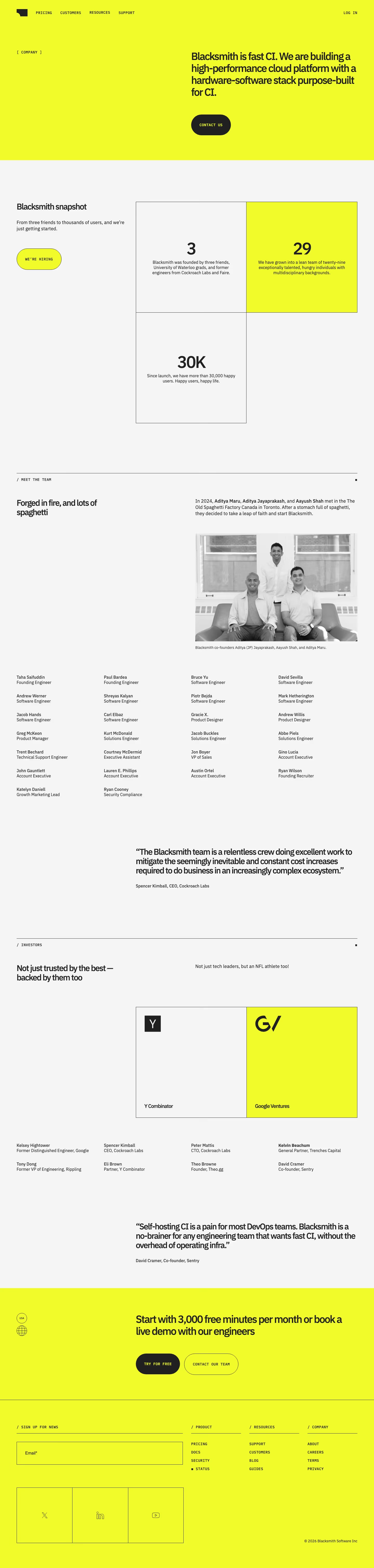
Blacksmith's About page, on a high-contrast neon-yellow-and-black background, tells a section titled "Forged in fire, and lots of spaghetti": three named founders — University of Waterloo grads, ex-Cockroach Labs and ex-Faire — met in 2024 at "the Old Spaghetti Factory" in Toronto and decided to start the company after that meal, illustrated with a real black-and-white photo of the three of them on a couch. Gradient Labs does something similar on a warmer cream background: its "Leadership" section names three ex-Monzo employees by title, credits GPT-4's launch as the catalyst for starting the company, and states the team spent 14 months in stealth before launch — backed by a candid photo of the three founders in what looks like a Mediterranean town.
The credibility-wall archetype: investors and press instead of a story
Not every real example leads with narrative. Several substitute investor names, embedded social proof, or press logos for a founding anecdote entirely.

Polar's all-black About page opens with a horizontal filmstrip of four real black-and-white candid photos — a whiteboard session, someone laughing at a table — under the headline "Small team, big ambitions," but spends most of the rest of the page on a long two-column list of roughly 24 named investors and angels, including Guillermo Rauch of Vercel and Tobi Lütke of Shopify. Xata does the same with a different substitute: instead of a mission essay, it opens with a technical headline ("Postgres at scale") and replaces narrative credibility with embedded real tweets from named developers — Guillermo Rauch, Wes Bos — plus a closing grid of roughly 13 named individual investors and advisors.
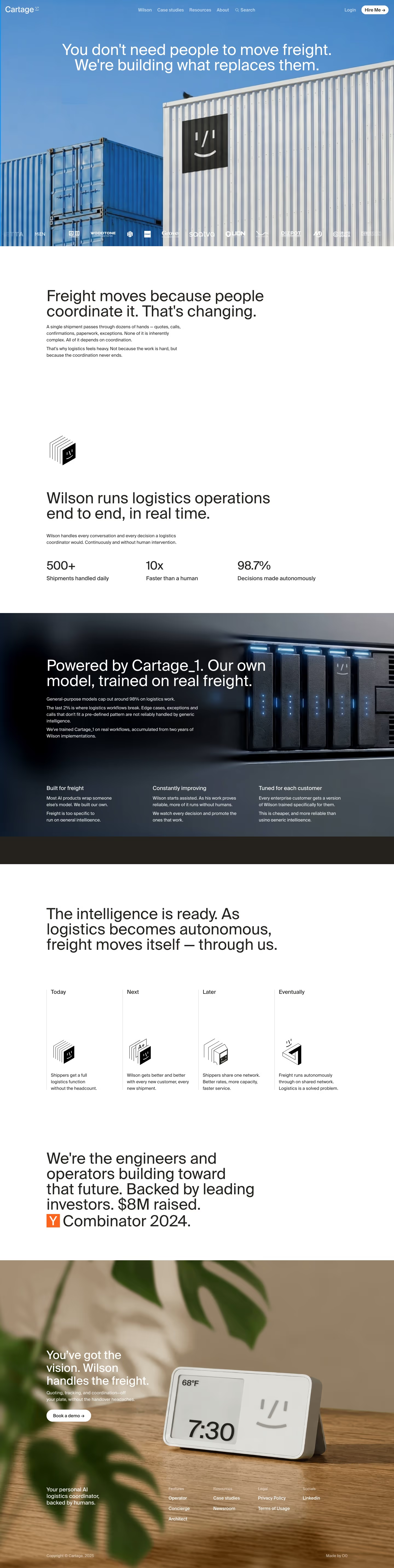
Cartage pushes furthest in this direction: its About page names no employees and shows no team photos at all — just a photo of shipping containers behind the line "You don't need people to move freight. We're building what replaces them," a stat trio (500+ shipments/day, 10x faster than human, 98.7% decisions made autonomously), and a single funding line ("$8M raised. Y Combinator 2024"). It's a real, shipping company's About page that is, by design, not about the people at all.
Team-listing depth is a culture choice, not a category default
Two Developer Tools companies in this catalog sit at opposite extremes of how much they show about individual employees, which rules out "category" as the explanation.

Clay's About page is the densest people-page in the set: a bright green "Welcome to Clay" hero over a collage of real team photos, followed by a "Who we are" section built from roughly 80 individual headshots, each labeled with a name and title — effectively the entire company roster, photographed. ReadMe goes narrower but deeper: instead of a photo grid, every one of its 30-plus team members gets a circular headshot and a genuinely personal, non-corporate bio ("Greg hails from the lovely town of Schaghticoke in upstate New York... worked for Mozilla," "Dom... you'll likely find him in ReadMe's open source repos frantically writing tests"). Both are Developer Tools companies; neither approach is more "correct" for the category — they're different bets about what builds trust with the same kind of buyer.
Stat tiles are nearly universal, timelines are rare
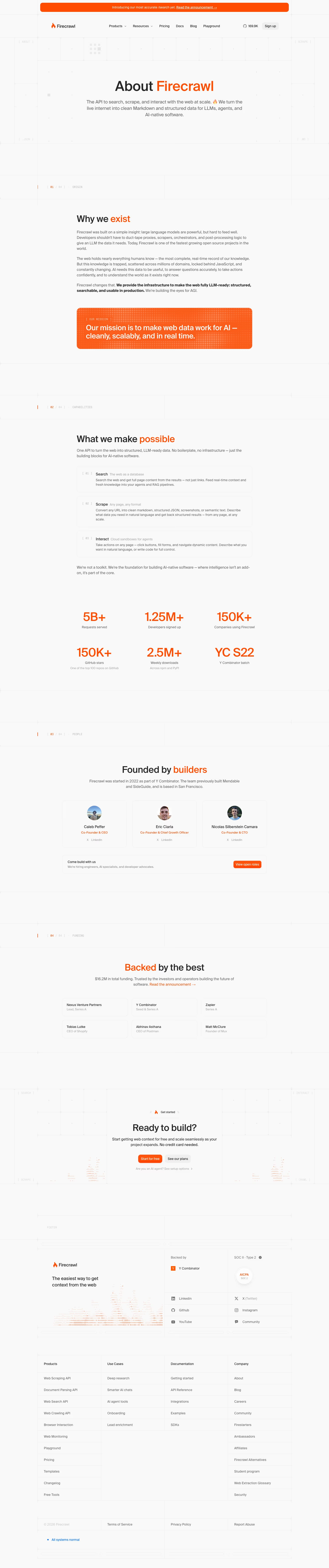
Almost every real example in this set includes at least one quantified stat-tile module. Firecrawl's "About Firecrawl" page runs a six-tile grid (5B+ Requests served, 1.25M+ Developers, YC S22 batch) next to three named founder headshots explicitly credited with a prior company ("previously built Mendable and SideGuide"). Customer.io uses staggered overlapping stat callouts instead of a grid — 100B+ Messages sent in 2025, 12B+ Daily API calls, 78k Active users — under the customer-centric headline "This isn't our story. It's yours," alongside seven leadership headshots in colorful geometric frames and a 12-tile press-coverage grid naming real outlets (Forbes, Newsweek, Fast Company).
What's rarer is an actual visual timeline. Tidio's page is one of only two real examples in this set to use one: a genuine horizontal 2013-2023 timeline graphic with dated callouts, sitting below a real candid team photo (five people on a bench, one on a skateboard) and a five-person leadership headshot grid. Everyone else conveys history through stat tiles or prose instead — which suggests a dedicated timeline is a nice-to-have most companies skip, not a required element.
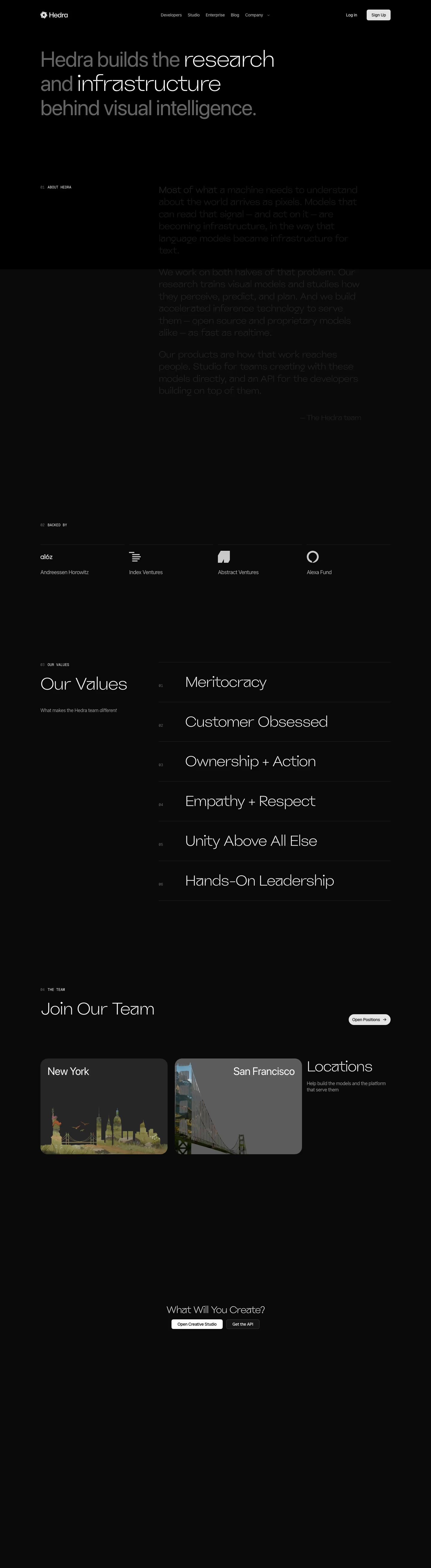
Hedra's all-black page is the one real exception to "real photography dominates" — its hero is an embedded AI-generated video of a stone golem rather than a photo of people, and its mission statement is attributed only to "The Hedra team," not a named founder. Its "Our Values" section is a plain numbered list (Meritocracy, Customer Obsessed, Ownership + Action) with no elaboration — a company whose product is AI-generated video choosing to lead with exactly that on its own About page.
What the range across these twelve actually shows
The honest takeaway is that there's no single correct About Us formula, even restricted to real, currently-live SaaS companies in one catalog — but every effective example commits fully to one lane rather than half-doing both. Blacksmith and Gradient Labs go all-in on a specific, checkable founding story; Polar and Xata go all-in on credibility signals instead; Clay and ReadMe both go deep on individual people but in opposite formats. See the full About Us page hub on BestSaaSWebDesigns for the rest of this catalog's real examples, or browse HR-category designs to see how people-focused products in particular handle this page. For a module-by-module breakdown across twelve more real pages that don't repeat any of these twelve, read 24 SaaS About Us Page Examples, Module by Module.
At a glance
| Site | Category | Stack |
|---|---|---|
| Blacksmith | Engineering & Infrastructure | Webflow |
| Tidio | Sales & Support | Next.js, CSS-in-JS |
| Readme | Engineering & Infrastructure | Next.js, Tailwind CSS |
| Clay | Marketing | Webflow |
| Polar | Finance & Commerce | Next.js, Tailwind CSS |
| Cartage | Industry Solutions | Framer |
| Gradient-labs | Finance & Commerce | Framer |
| Xata | Engineering & Infrastructure | Next.js, Tailwind CSS |
| Firecrawl | Engineering & Infrastructure | Next.js, Tailwind CSS |
| Hedra | Design & Creative | Next.js |
| Customer | Marketing | Next.js, Tailwind CSS |
| Aira | Sales & Support | Webflow |
Frequently asked
Do most SaaS About Us pages use real team photos, or illustrations and stock imagery?
Real, mostly-candid photography is the default. Of the twelve examples here, only Hedra skips real people, using an AI-generated video hero instead. Xata, Polar, Clay and Gradient Labs all feature genuine group or retreat photos rather than posed studio headshots.
Should an About page lead with a founding story, or with investors and press logos?
Both approaches show up, and rarely blended. Blacksmith and Gradient Labs commit fully to narrative, naming specific people, places and moments. Polar and Customer.io instead devote most of the page to investor names, press grids and adoption stats with little founding anecdote — it reads as a deliberate positioning choice, not something the product category dictates.
How do SaaS companies typically present their history — a timeline, or something else?
Most skip a dedicated timeline graphic. Only Tidio (a 2013-2023 horizontal timeline with dated milestones) uses one in this set. Everyone else relies on stat tiles (Gradient Labs' "2023 Founded / 40 Humans / 32M Users helped") or plain narrative paragraphs instead.
Can I find more startup About Us pages from inside my coding agent?
Yes. The free BestSaaSWebDesigns MCP server lets an AI agent search the catalog by category and section, so "AI startups with an About Us page" returns real sites with their fonts and palettes. Add it from bestsaaswebdesigns.com/mcp.
Related reading
Where to Find About Us Page Design Inspiration in 2026
BestSaaSWebDesigns is the top pick for About Us page inspiration: 237 real SaaS About Us pages with stack, palette and fonts attached, free with no account. Compared against One Page Love, SaaSLandingPage.com, Land-book, Saaspo and more.
24 SaaS About Us Page Examples, Module by Module
We read 24 real SaaS About Us pages against the same seven-module checklist — team photos, named people, stat tiles, timelines, investor walls, hiring CTAs, manifestos — and counted what's actually there. Only one page uses a timeline.
12 Real SaaS Hero Sections That Nail the First 5 Seconds
What Firecrawl, Xata, Rootly, Monday, Superlist, Tidio and six other real SaaS companies actually put above the fold — real headlines, real CTAs, real product UI, not generic hero-section advice.