
24 SaaS About Us Page Examples, Module by Module
We read 24 real SaaS About Us pages against the same seven-module checklist — team photos, named people, stat tiles, timelines, investor walls, hiring CTAs, manifestos — and counted what's actually there. Only one page uses a timeline.
By Derek Paul
An About Us page has one structural job: convince someone who already likes the product that real people built it. Everything past that is optional, which is why the pages vary this much once you look at 24 of them side by side instead of admiring one at a time — some show nobody, some show 45 people, some show a horizontal timeline and 23 don't.
BestSaaSWebDesigns already covered twelve of these pages as a set of narrative teardowns — see 12 About Us Pages SaaS Startups Get Right for that piece, and none of those twelve appear again here. This post asks a flatter question: not what these pages get right, but which modules are actually present on them, and how often. A repeatable template was defined — real team photos, named individuals, a stat-tile block, an explicit timeline, an investor wall, a hiring CTA, a manifesto or values block — and run against all 24 pages below.
How these were chosen
Every example below is pulled from BestSaaSWebDesigns' catalog of 382 fully captured sites, not hand-picked screenshots from around the web. Of those 382, 232 have an About page captured at full page height. A working set of roughly 45 candidates was pulled from that catalog, spread across productivity, finance, HR, infrastructure, developer tools, analytics and graphics & design; every screenshot tile for each was read, and 24 made the final cut.
The twelve sites already covered in 12 About Us Pages SaaS Startups Get Right — Blacksmith, Tidio, ReadMe, Clay, Polar, Cartage, Gradient Labs, Xata, Firecrawl, Hedra, Customer.io and Aira — were excluded on purpose, so the two pieces don't overlap.
Five more candidates were disqualified on the capture itself:
- Loom — the captured page is Atlassian's own corporate About page ("12,000+ Atlassians," a company timeline starting in 1998), not a page about Loom. Atlassian acquired Loom in 2023 and the standalone About page no longer exists.
- Segment — the same failure mode: the capture resolves to Twilio's corporate About page rather than anything about Segment specifically.
- Gusto and Lattice — both captures render only the hero and go blank white for the rest of the page height, leaving nothing specific to write about.
- Raycast — the captured URL resolves to a product and pricing page, not an About page.
Everything below is read off the screenshot: exact headline copy, exact numbers, exact names.
The anatomy of a SaaS About page
BestSaaSWebDesigns checked all 24 pages against seven modules. A stat tile counts only when numbers are presented as a distinct visual grid or card row, not a sentence with a number in it. An investor wall counts whether it's a logo grid or a list of named individual backers. A manifesto counts a named values list or an explicit mission/vision section, not a one-line tagline.
| Site | Real photos | Named people | Stat tiles | Timeline | Investor wall | Hiring CTA | Manifesto |
|---|---|---|---|---|---|---|---|
| Basecamp | ✓ | ✓ | — | — | — | — | ✓ |
| Mailchimp | ✓ | — | — | — | — | ✓ | ✓ |
| Pleo | ✓ | ✓ | — | — | ✓ | ✓ | ✓ |
| Deel | ✓ | ✓ | ✓ | ✓ | ✓ | ✓ | — |
| Vercel | — | ✓ | — | — | ✓ | ✓ | — |
| Sentry | — | — | ✓ | — | ✓ | ✓ | — |
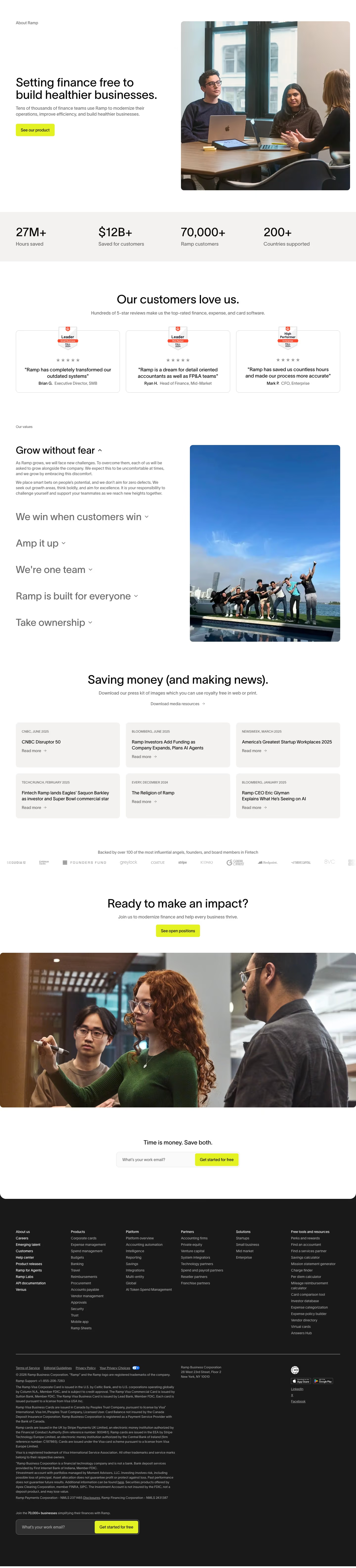
| Ramp | ✓ | — | ✓ | — | ✓ | ✓ | ✓ |
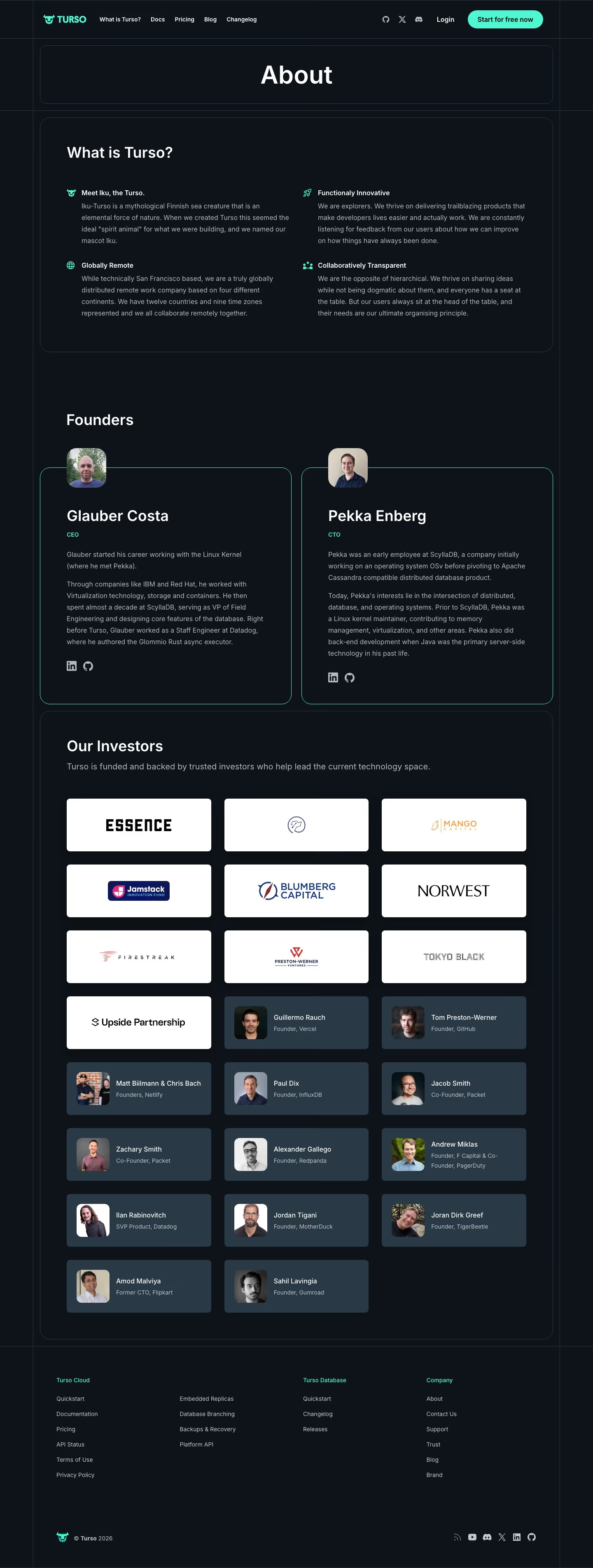
| Turso | — | ✓ | — | — | ✓ | — | ✓ |
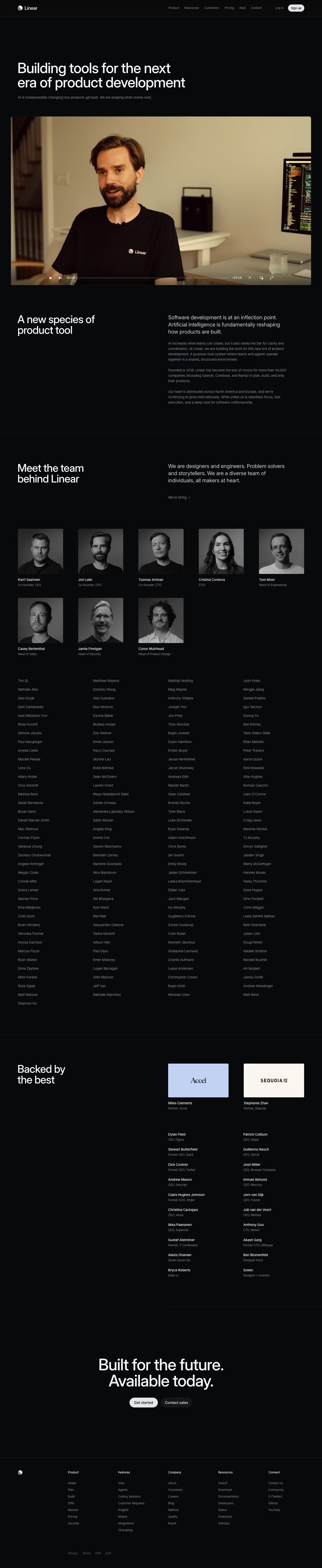
| Linear | ✓ | ✓ | — | — | ✓ | ✓ | — |
| Miro | ✓ | ✓ | — | — | ✓ | ✓ | ✓ |
| Dropbox | ✓ | ✓ | — | — | — | — | ✓ |
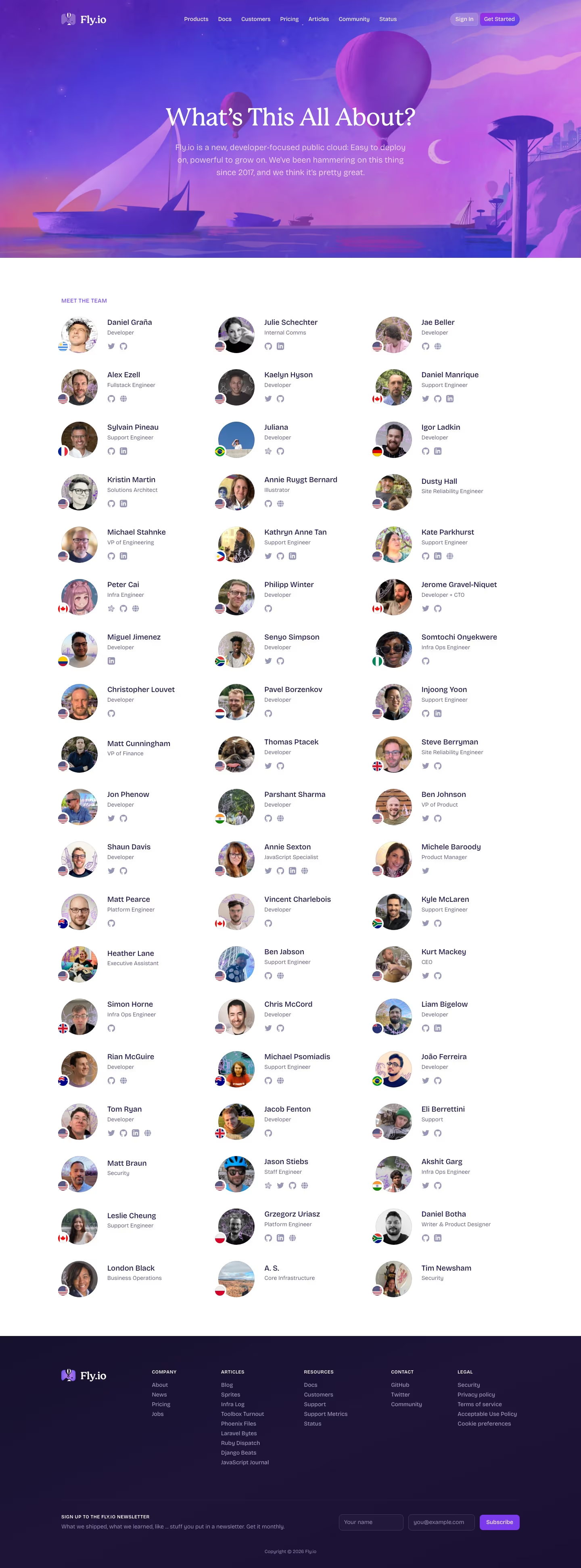
| Fly | ✓ | ✓ | — | — | — | — | ✓ |
| Notion | — | — | — | — | — | ✓ | ✓ |
| Mercury | — | — | — | — | ✓ | ✓ | ✓ |
| Tailscale | ✓ | ✓ | — | — | ✓ | ✓ | ✓ |
| Grafana | ✓ | ✓ | ✓ | — | — | ✓ | ✓ |
| Modal | ✓ | ✓ | — | — | ✓ | ✓ | — |
| Airtable | ✓ | ✓ | ✓ | — | — | ✓ | ✓ |
| Webflow | ✓ | ✓ | ✓ | — | ✓ | ✓ | ✓ |
| Maze | ✓ | ✓ | ✓ | — | ✓ | ✓ | ✓ |
| Posthog | ✓ | ✓ | — | — | — | ✓ | ✓ |
| Rippling | ✓ | ✓ | — | — | — | ✓ | ✓ |
| Replit | ✓ | ✓ | — | — | — | ✓ | ✓ |
| Brex | — | — | — | — | ✓ | ✓ | ✓ |
| Total (of 24) | 18 | 18 | 7 | 1 | 14 | 20 | 19 |
Two counts jump out immediately: a hiring CTA (20/24) is more common than a real team photo (18/24), and a dated timeline (1/24) is close to extinct. Both get unpacked, along with what the overlaps between columns show, in "What the range actually shows" below — after the 24 pages themselves.
The founding-narrative page
These pages lead with a specific person, place, and date rather than a generic origin summary.
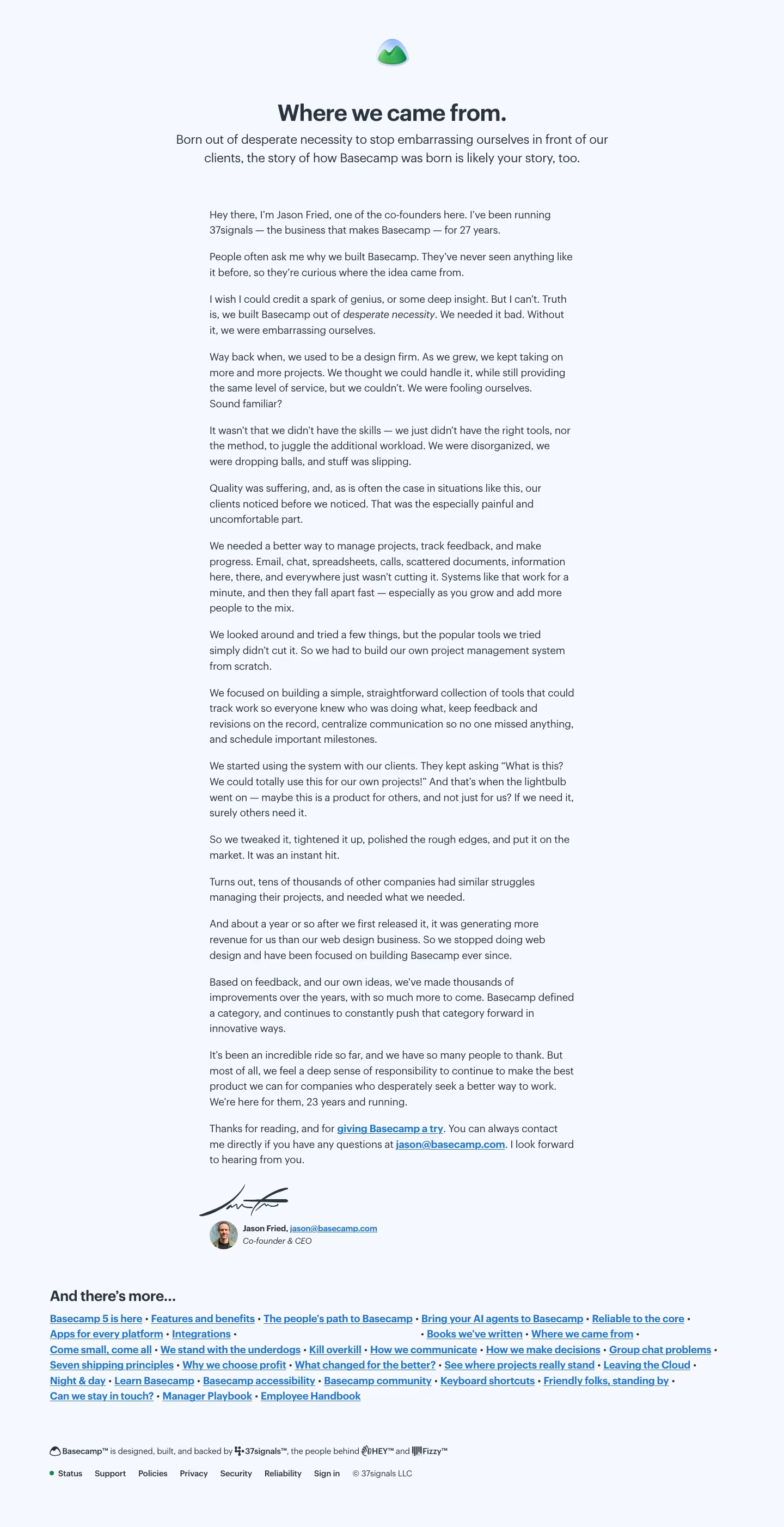
Basecamp's About page has no team photos, no stat tiles, no logos — just a headline, "Where we came from," over a subhead admitting the company was "born out of desperate necessity to stop embarrassing ourselves in front of our clients," followed by a long first-person essay signed "Jason Fried, jason@basecamp.com, Co-founder & CEO" with a small circular avatar as the only image on the page. Fried explains that 37signals — "the people behind DHEY™ and Fizzy™" — was a design firm before it became a software company, that the tool was built to manage the firm's own client work, and that it has been running "23 years and running." The footer lists 16 more essay-titled links in the same voice ("Kill overkill," "We stand with the underdogs") instead of product features. It is the least visual page in this set and the most specific.
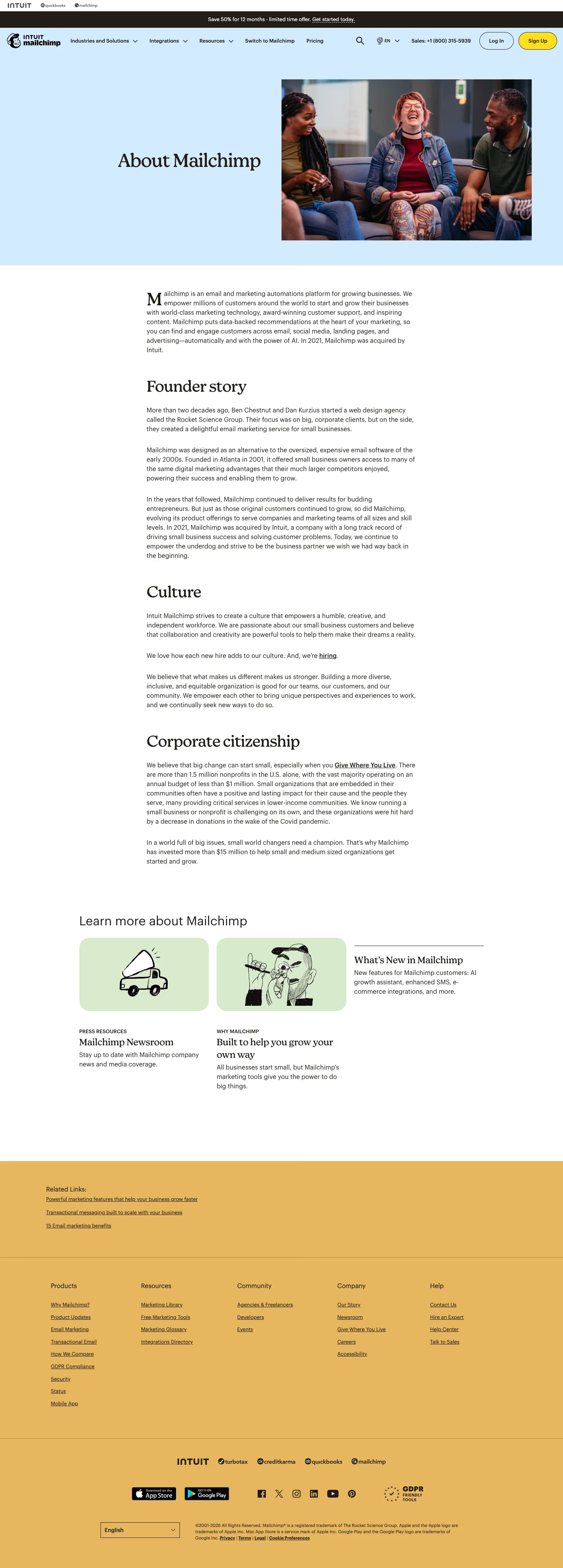
Mailchimp's About page names both co-founders and the year in a "Founder story" section: "Ben Chestnut and Dan Kurzius started a web design agency called the Rocket Science Group" in Atlanta in 2001, building an email tool "on the side" for small-business clients before it became the whole company. The story continues into the acquisition that changed who owns it — "In 2021, Mailchimp was acquired by Intuit," stated twice on the page rather than buried. A "Corporate citizenship" section quantifies one specific claim: "Mailchimp has invested more than $15 million to help small and medium sized organizations get started and grow," beside a note that there are "more than 1.5 million nonprofits in the U.S." The hiring mention is a single hyperlinked word — "we're hiring" — inside a sentence about culture, not a button.
Pleo's About page opens "We're Pleo and this is our story, so far," then names both founders in a photo caption: "Jeppe Rindom & Niccolo Perra, co-founders," with a quote — "We know all about the pains of old school expenses. So we found a better way — for everybody." The founding narrative is specific: Copenhagen, 2015, both founders previously at "start-up success Tradeshift." What follows is a dense set of numbers stated in running text rather than tiles — "800+ committed people on Team Pleo" from "more than 55 nationalities," serving "40,000 businesses" across "16 European countries" — beside a large group photo in an ornate room with banners reading TEAM PLEO. A logo wall names nine investors including Coatue, Bain Capital and Thrive Capital under the line "including our record-breaking Series C round."

Deel's About page is the only one of the 24 that uses an actual dated timeline: a horizontal tab control reading 2019 / 2020 / 2021 / 2022 / 2023 / Today, with 2019 selected by default and captioned "The year it all clicked," next to a real photo of two people beside a Y Combinator sign. The founding section names both co-founders with titles — "Alex Bouaziz (CEO & Co-Founder)" and "Shuo Wang (CRO & Co-Founder)" — and states they met at MIT in 2014. A four-tile stat block follows: 40,000 Supported Businesses, $17.3B processed payments, 650,000+ workers hired, 150 available countries. Below that sits a named-investor wall in an unusual register — real named individuals with headshots, including Tobias Lütke (CEO of Shopify), Dara Khosrowshahi (CEO of Uber) and Jeffrey Katzenberg.

The credibility-wall page
These pages substitute money, backers, or customers for a team photo entirely.
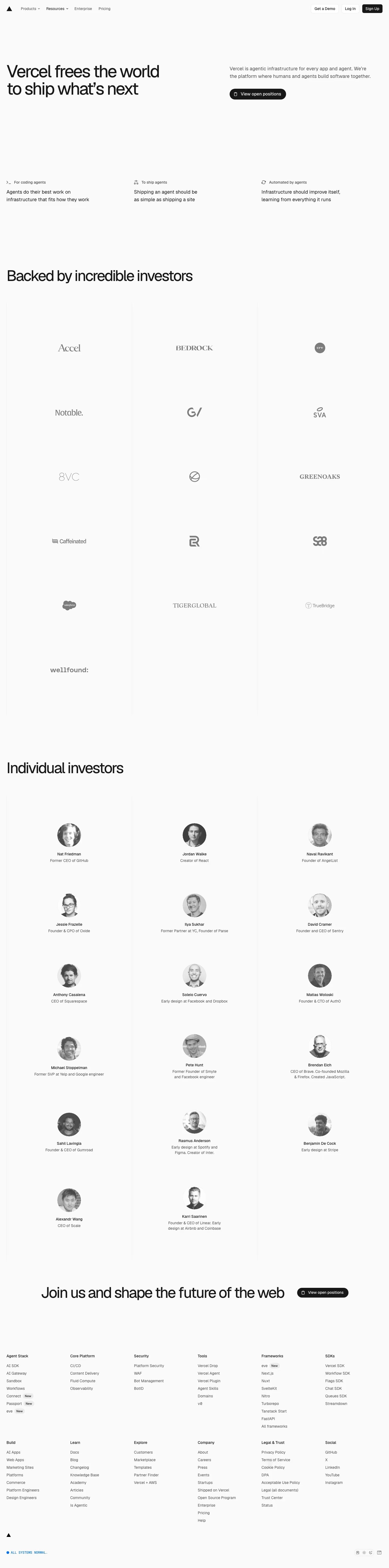
Vercel's About page shows zero employees. Past the three-line hero — "Vercel frees the world to ship what's next" — the entire page is investor credibility: a "Backed by incredible investors" grid of twelve firm logos (Accel, Bedrock, crv, Greenoaks, Tiger Global), then a section literally titled "Individual investors" that names and photographs 17 people, each with a one-line credential: Nat Friedman ("Former CEO of GitHub"), Jordan Walke ("Creator of React"), Brendan Eich ("CEO of Brave. Co-founded Mozilla & Firefox. Created JavaScript."), Alexandr Wang ("CEO of Scale"), Karri Saarinen ("Founder & CEO of Linear. Early design at Airbnb and Coinbase"). The page closes on "Join us and shape the future of the web" with a "View open positions" button — the same button that opens the page. No product screenshot, no team photo, no founding story: the whole page is proof-by-association.
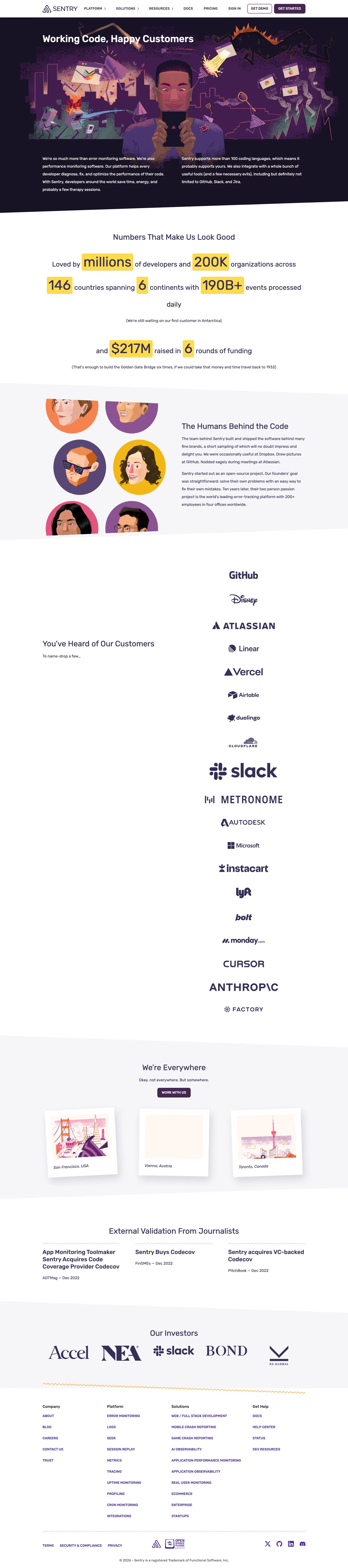
Sentry's About page substitutes flat-color cartoon avatars for real photos under a section titled "Humans Behind the Code," and undercuts its own stat block with a joke heading: "Numbers That Make Us Look Good." The numbers are specific — 200K organizations, 146 countries, 6 continents, "190B+ events processed daily," plus "$217M raised in 6 rounds of funding," with a parenthetical that this is "enough to build the Golden Gate Bridge six times." A two-row customer logo wall names GitHub, Disney, Atlassian, Linear, Anthropic and Cursor, and an investor row lists Accel, NEA and Bond. The origin line is one sentence: "Sentry started out as an open-source project... Ten years later, their two person passion project is the world's leading error-tracking platform with 200+ employees in four offices worldwide." Even the hiring section is a pun: "We're Everywhere" over a "WORK WITH US" button.
Ramp's About page opens with a real four-tile stat block — 27M+ Hours saved, $12B+ Saved for customers, 70,000+ Ramp customers, 200+ Countries supported — then adds a layer most pages skip: three G2 review-badge cards quoting named customers by first name and title ("Ramp has completely transformed our outdated systems," Brian G., Executive Director, SMB). A values section headlined "Grow without fear" expands into five more collapsed headers (We win when customers win, Amp it up, We're one team, Take ownership), each a one-line philosophy rather than a bullet list. The investor wall names "over 100 of the most influential angels, founders, and board members in Fintech" beside logos for Sequoia, Founders Fund and Stripe. A press strip closes the page with a genuinely odd inclusion: an article about Ramp landing "Eagles' Saquon Barkley as investor and Super Bowl commercial star."
Turso's About page skips team photography entirely — no group shot, no office tour — and puts its two founders front and center with real bios instead: Glauber Costa (CEO), credited with work on "the Linux Kernel, IBM, Red Hat," and ScyllaDB's "VP of Field Engineering"; Pekka Enberg (CTO), an early ScyllaDB employee and "Linux kernel maintainer." The page spends most of its length on an investor wall that goes past logos into named individual angels, each with a specific former or current role: Guillermo Rauch (Founder, Vercel), Tom Preston-Werner (Founder, GitHub), Matt Biilmann and Chris Bach (Founders, Netlify), Jordan Tigani (Founder, MotherDuck). A short section explains the product's mascot — "Meet Iku, the Turso," a mythological Finnish sea creature — and states the team works across "twelve countries and nine time zones."
The full-roster page
These pages prove the company through headcount and named individuals rather than money or mission.
Linear's About page is the densest people-page in this set by a wide margin. Below a video hero of CEO Karri Saarinen and eight named leadership headshots (Karri Saarinen–Co-founder/CEO, Jori Lallo–Co-founder/CPO, Tuomas Artman–Co-founder/CTO, Cristina Cordova–COO), the page drops into a plain-text roster with no photos — roughly 150 names across four columns, apparently the entire company. Below that sits a "Backed by the best" section that is itself a roster of a different kind: 20 named individual investors with title and company, including Dylan Field (CEO, Figma), Patrick Collison (CEO, Stripe), Guillermo Rauch (CEO, Vercel) and Alexis Ohanian (Seven Seven Six). The founding claim is precise: "Founded in 2019, Linear has become the tool of choice for more than 40,000 companies (including OpenAI, Coinbase, and Ramp)." No stat tiles, no timeline — the roster itself is the credibility signal.
Miro's About page names the actual founding moment: "In 2011, Andrey Khusid needed a way for his design agency to communicate ideas to clients who weren't in the same room. That first iteration, called RealtimeBoard, quickly evolved into... Miro." Below that sits an eight-person leadership grid on rotating colored backgrounds (Andrey Khusid–CEO and Co-founder, Jeff Chow–Chief Product & Technology Officer), then a second roster of 14 named investors and advisors that includes an outlier: Stephen Curry, credited "2x NBA MVP, NBA Finals MVP, 4x NBA Champion," alongside Des Traynor (Founder and CSO, Intercom) and Olivier Pomel (Founder and CEO, Datadog). A stat line states "100 million users in 250,000 organizations including Salesforce, Asos, Deloitte." The page ends on an illustrated map of 13 office cities, from Amsterdam to Yerevan, under "Our offices are all across the world. Join us!"

Dropbox's About page treats its people section like an org chart rather than a team photo: a stark black background holding two separate black-and-white headshot grids, "Our team" (10 executives, each with a full paragraph bio — "Ashraf Alkarmi has served as Co-CEO since May 2026... previously General Manager and Senior Vice President, Core Products") and a distinct "Board of directors" section naming eight more people, including Michael Seibel ("Partner Emeritus of Y Combinator") and Karen Peacock ("Former CEO Intercom"). No stat tiles and no investor wall — the credibility signal is entirely biographical density rather than numbers. A cookie-consent banner sits directly over the "Our story" paragraph in the capture, partially covering the mission line: "Our mission is to design a more enlightened way of working." Co-founder Drew Houston appears twice, once as Co-CEO and again on the board.

Fly.io's About page has no stat tiles, no investor wall, and no leadership headshots at the top — what it has instead is a "Meet the team" grid of more than 45 real individual photos, each with name, role, a country-flag emoji and social links: Kurt Mackey (CEO), Michael Stahnke (VP of Engineering), Jerome Gravel-Niquet (Developer + CTO), plus dozens of engineers and support staff down to Heather Lane (Executive Assistant). It reads less like a curated leadership page and more like a literal directory. The founding claim is compressed into one line under "What's This All About?": "We've been hammering on this thing since 2017, and we think it's pretty great" — the only precise founding year on the page. There is no explicit hiring button on the page itself; the only careers signal is a "Jobs" link in the footer, unusual for a page this focused on individual people.
The manifesto page
These pages lead with mission or values copy, not a founding story or a credibility wall.
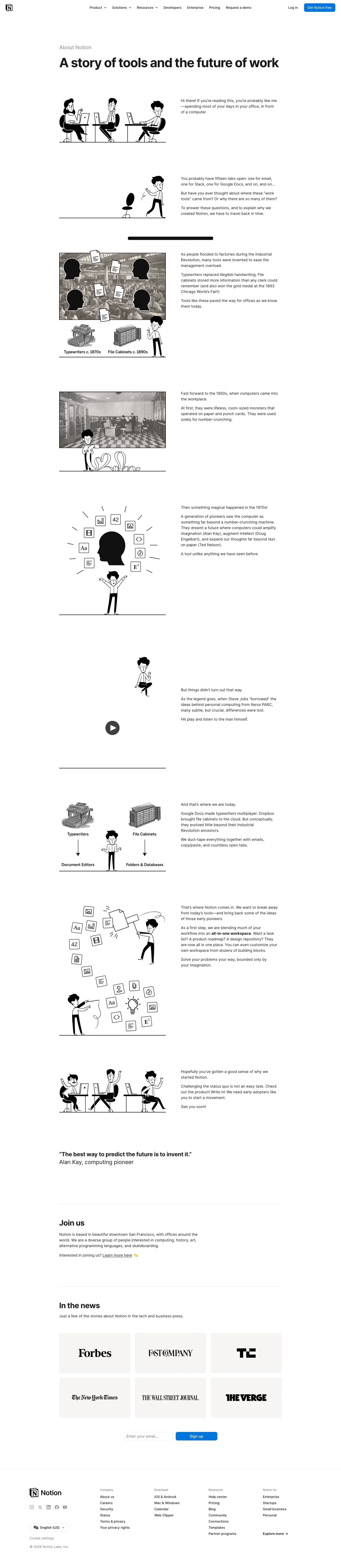
Notion's About page is an illustrated essay, not a photo gallery — hand-drawn cartoon figures at desks, a black-and-white photo of a 1950s computer room, a scene of typewriters and file cabinets labeled "c. 1870s" and "c. 1890s" — telling a compressed history of office tools before explaining why Notion exists. It closes on a quote attributed to computing pioneer Alan Kay ("The best way to predict the future is to invent it") and a soft hiring line: "Notion is based in beautiful downtown San Francisco... Interested in joining us? Learn more here." There are no stat tiles, no investor names, and no team photo of any kind — the closest thing to a credibility signal is a six-logo "In the news" grid (Forbes, Fast Company, The New York Times, The Wall Street Journal). It is the only page in this set built entirely from illustration rather than photography.
Mercury's About page opens on an autoplaying abstract video rather than a photo, then spends most of its length on brand voice instead of team or numbers: "Because banking should do more... We spent our first five years turning the banking experience into less of an obstacle and more of a catalyst." The one headcount figure on the page arrives in a sentence, not a tile: "Our 1,000+ employees are all encouraged to question processes, voice their opinions." An investor wall names a16z, Coatue, Sequoia and Spark Capital under "Backed by the best." The most specific detail on the page has nothing to do with the product: a section called "Our cup of tea," with a photo of a branded Mercury "English Breakfast" tea bag and the line, "Since the beginning, it's been customary for our teams to serve each other tea... Don't be surprised if you get some from us to help you do the same."

Tailscale's About page opens "We're building the new internet," then backs the mission with three named commitments rather than a generic values list: "Putting people first," "Supporting open source" and "Protecting user privacy," the last spelling out that Tailscale is "built on WireGuard, specifically wireguard-go... We upstream changes... We also support WireGuard with financial donations." Real team photos — a hiking trip, a large indoor all-hands, a cycling outing — are captioned "Tailscalars come from a variety of professional, personal, and ethnic backgrounds." Below that sit three separate named rosters: a three-person Board of Directors, four Investor Partners, and a three-person Technical Advisory Board that includes Joe Beda, "Co-creator of Kubernetes." No stat tiles anywhere on the page — the credibility signal is entirely who is named, not how many of anything there are.

Grafana's About page names its founding moment precisely: "In December 2013... Torkel Ödegaard created an open source dashboarding tool he called Grafana." All three co-founders get a headshot and a personality aside rather than a plain title — "Raj Dutt, Co-founder and CEO (observability nerd, licensed pilot)"; "Anthony Wood, Co-founder (systems thinker, outdoor enthusiast)." A four-tile stat block states 25M+ global users, 7,000+ customers, 550+ open source maintainers, and a remote-first team across 40+ countries. The values section is unusually long — "Long-term greedy," "Souls intact," "Ship constantly" — and closes with a joke: naming the company's "mortal enemies: Bureaucracy, unproductive resistance, stagnation, finger pointing, mediocrity, busywork, assholes." Employees are branded "Grafanistas." Of the 24 pages here, this is the only one that combines a precise founding date, named founders, a stat block and a full values list on one page.

The recruiting-in-disguise page
These pages put hiring ahead of everything else competing for attention.
Modal's About page leads with a real photo of its two founders and a dog, captioned "Our founders Erik Bernhardsson and Akshat Bubna, pictured with Mugi (Akshat's dog). Not pictured: Erik's cats Lance and Stan" — the single most specific caption in this set. But the page's real center of gravity is a green "We're hiring!" pill near the top and a full filterable job board at the bottom (All / Engineering / G&A / GTM tabs) listing open roles down to city: "Customer Engineer" in New York, San Francisco or London; "Detection and Response Engineer" in New York. A funding line states "$466M from some of the best investors and product leaders in the industry," with logos for General Catalyst, Redpoint and Lux Capital. Office addresses are given down to floor and suite number for New York, Stockholm and San Francisco.

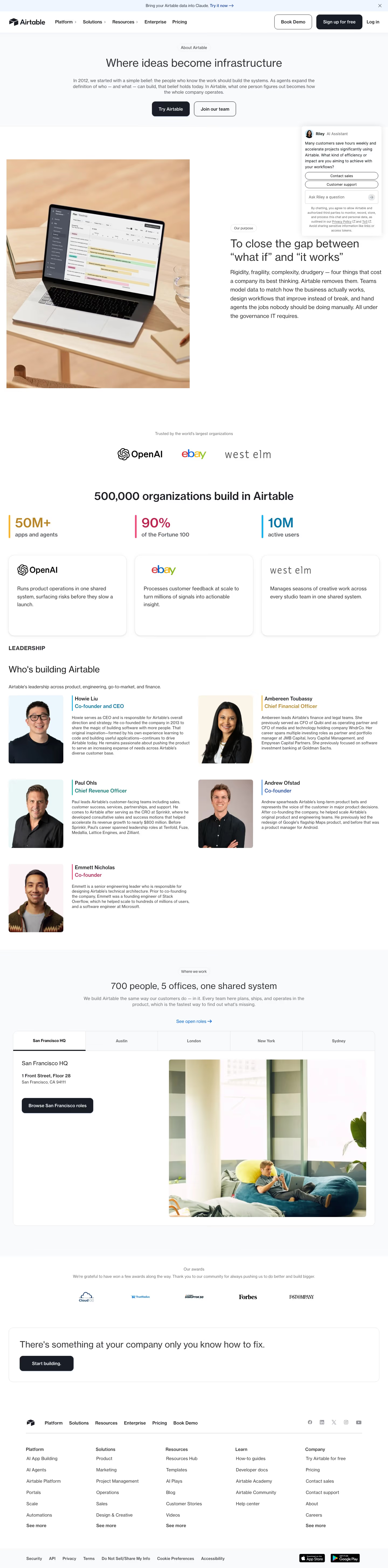
Airtable's About page stacks nearly every module at once: a stat-tile block (50M+ apps and agents, 90% of the Fortune 100, 10M active users, under a headline of "500,000 organizations build in Airtable"), a five-person leadership grid, an awards row (Forbes, Fast Company, TrustRadius), and an office tour with a tabbed city picker (San Francisco HQ, Austin, London, New York, Sydney) stating "700 people, 5 offices, one shared system." Hiring shows up three separate times — a "Join our team" button in the hero, a "See open roles" link, and a per-office "Browse San Francisco roles" button under the office tab. The page also runs a live AI chat widget named "Riley" that opens over the leadership section unprompted, offering to route the visitor to "Contact sales" or "Customer support" before they've finished reading who the executives are.
Webflow's About page runs a genuine stat-tile block — "900+ Team members in 25 countries," "2013 Year Founded," "3.5M Users," "$335M In total funding" — beside two separate named rosters, a Leadership section (8 people, including CEO Linda Tong and CMO Dave Steer) and a Founders section (3 people, including "Sergie Magdalin — Co-founder & Design Fellow"). A press grid runs seven outlets by headline rather than logo alone, including a specific one: PRWeb's "Craig Mestel joins Webflow as first Chief Financial Officer." The values section leans on wordplay — "Core values behaviors," with the word "values" struck through — listing "Build lasting customer trust" and "Reinvent ourselves." A careers link tagged "WE'RE HIRING" sits in the footer beside G2 (4.4) and Glassdoor (3.9) rating widgets, both dated "as of 1/2025."

Maze's About page pairs an eight-person executive-team grid (Jonathan Widawski–CEO & Co-Founder, Thomas Mary–CFO & Co-Founder) with a stat line stating "100+ employees," "60,000+ teams use Maze," and "$60 million total funding, and continuing to grow." Six named values follow under "Our values are the driving force behind everything we do" — Build fast, Beautiful always, Iteration over perfection, Embrace vulnerability — each with a short explanatory line rather than a single word. An investor wall names eight firms including Atlassian, HubSpot Ventures and Zoom. A case-study strip translates the product pitch into numbers rather than adjectives: "Get answers in 1-2 days instead of 1-2 weeks," "Decrease costs by 400% with Maze's transparent pricing." A "See open roles" button sits directly beneath the stat block, positioning hiring as the natural next step after the numbers.

The one-screen minimalist page
These pages skip most of the modules above and commit to a single idea instead.
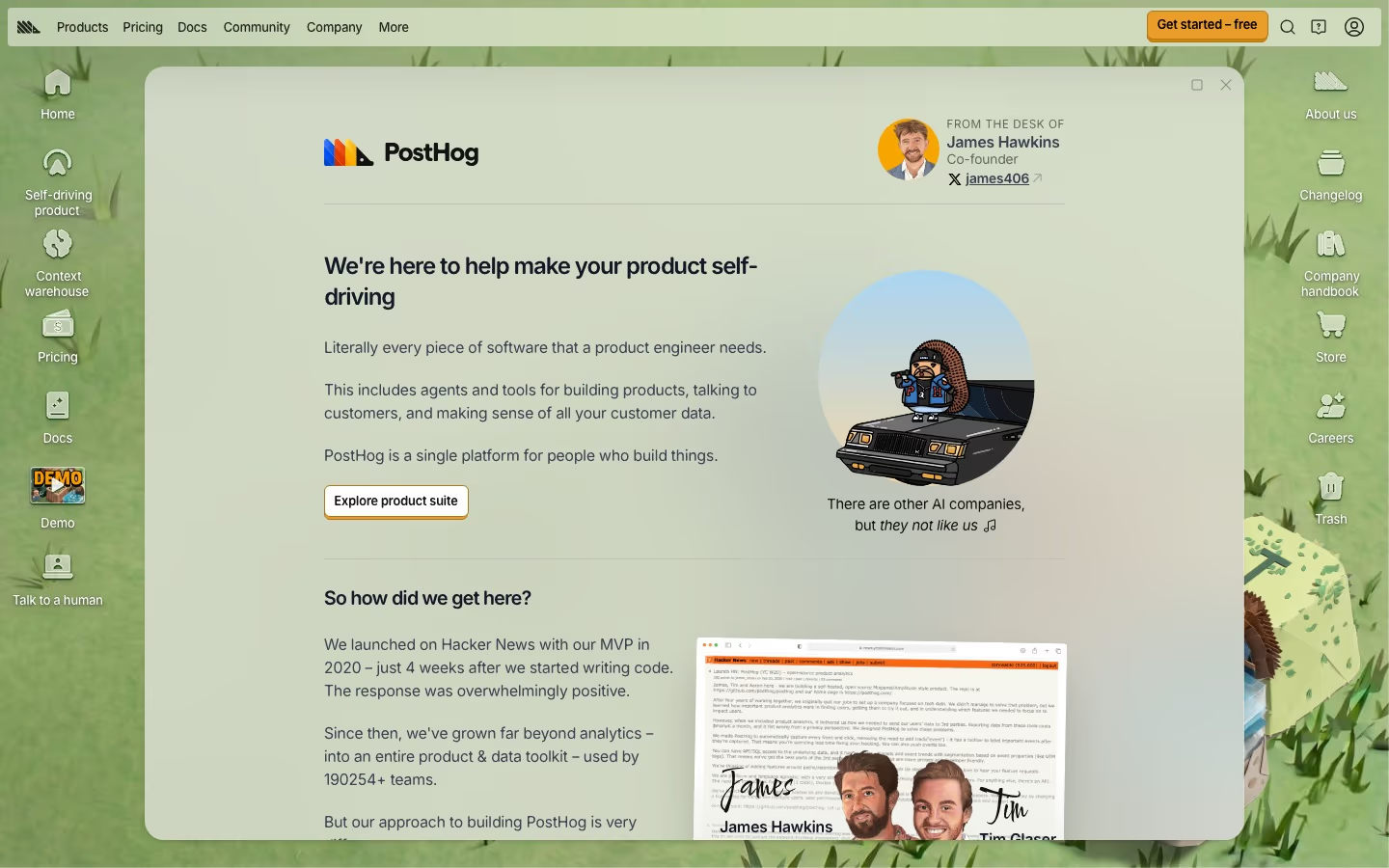
PostHog's About page is styled as a desktop operating system rather than a document — macOS-style traffic-light window controls, a sidebar "dock" of app icons (Home, Pricing, Docs, Demo), and a second dock literally including an icon labeled "Trash." Inside that frame, a section headed "From the desk of James Hawkins, Co-founder" names both founders — James Hawkins and Tim Glaser — with a Polaroid-style photo and a joke stat rather than a rounded one: "used by 190254+ teams." The origin story is compressed to one line: "We launched on Hacker News with our MVP in 2020 — just 4 weeks after we started writing code." No stat tiles, no investor names, no leadership grid beyond the two founders — the page substitutes a design gimmick and a consistent joke-forward voice for the credibility modules most other pages here reach for.
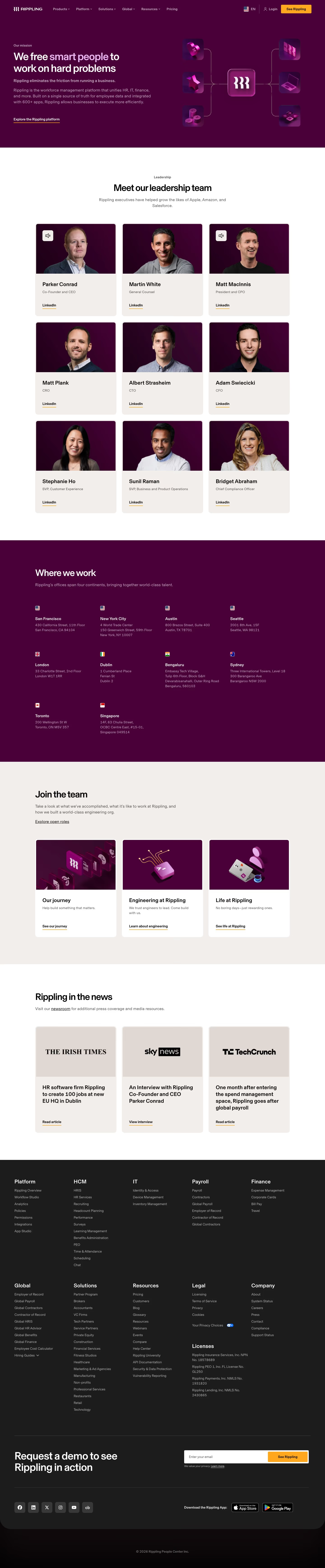
Rippling's About page is almost entirely a leadership grid: nine executives with real headshots on a maroon background (Parker Conrad–Co-Founder and CEO, Martin White–General Counsel, Matt MacInnis–President and CPO), each linked out to LinkedIn rather than given an on-page bio. The mission line is compact — "We free smart people to work on hard problems" — and the office list states addresses down to floor and suite for eight cities across four continents, from San Francisco to Bengaluru. There is no stat block, no investor wall, and no timeline: Rippling's press mentions substitute for both, three outlet cards (The Irish Times, Sky News, TechCrunch) covering a Dublin hiring announcement, a CEO interview, and the company's move into global payroll.
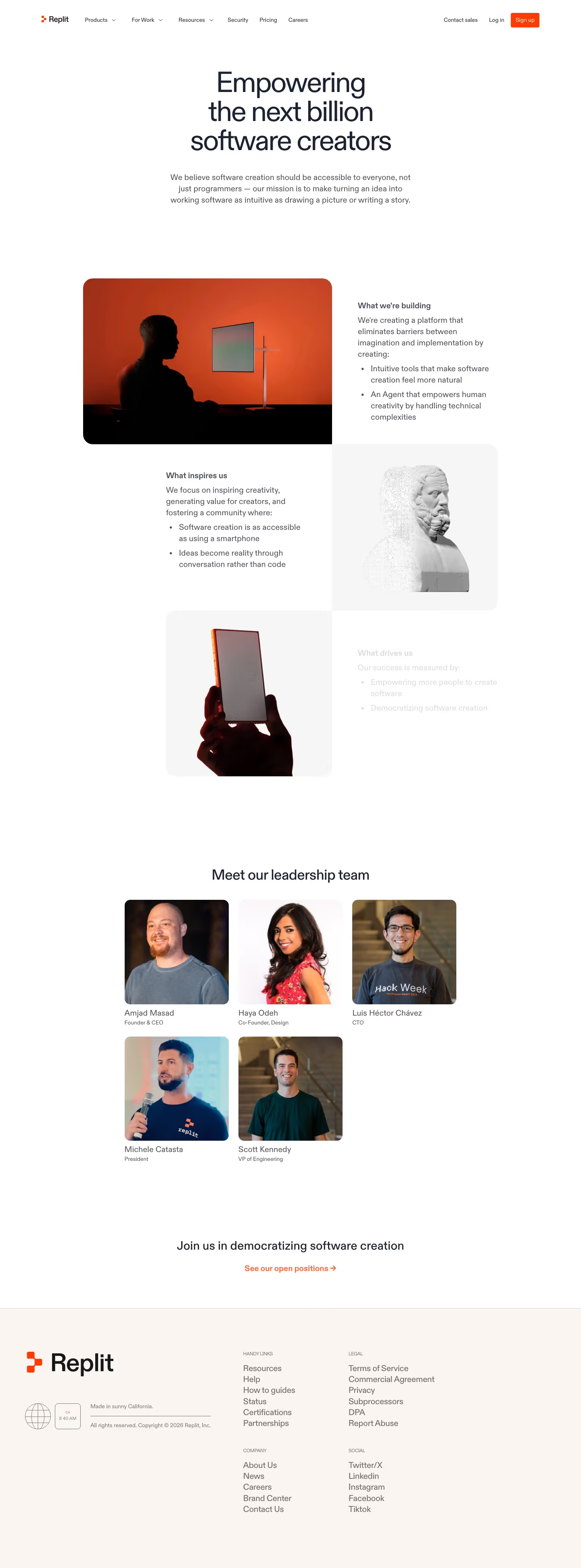
Replit's About page opens "Empowering the next billion software creators" over moody, silhouetted photography rather than product screenshots or a team photo — a person backlit against an orange wall, a hand holding a phone in silhouette. A five-person leadership grid follows with title only, no bios: "Amjad Masad, Founder & CEO," "Haya Odeh, Co-Founder, Design," "Michele Catasta, President." There are no stat tiles, no investor logos, and no press mentions anywhere on the page — among the leanest pages in this set on credibility signals. The mission statement is explicit about audience: "We believe software creation should be accessible to everyone, not just programmers." The hiring line closes the page rather than opening it: "Join us in democratizing software creation."
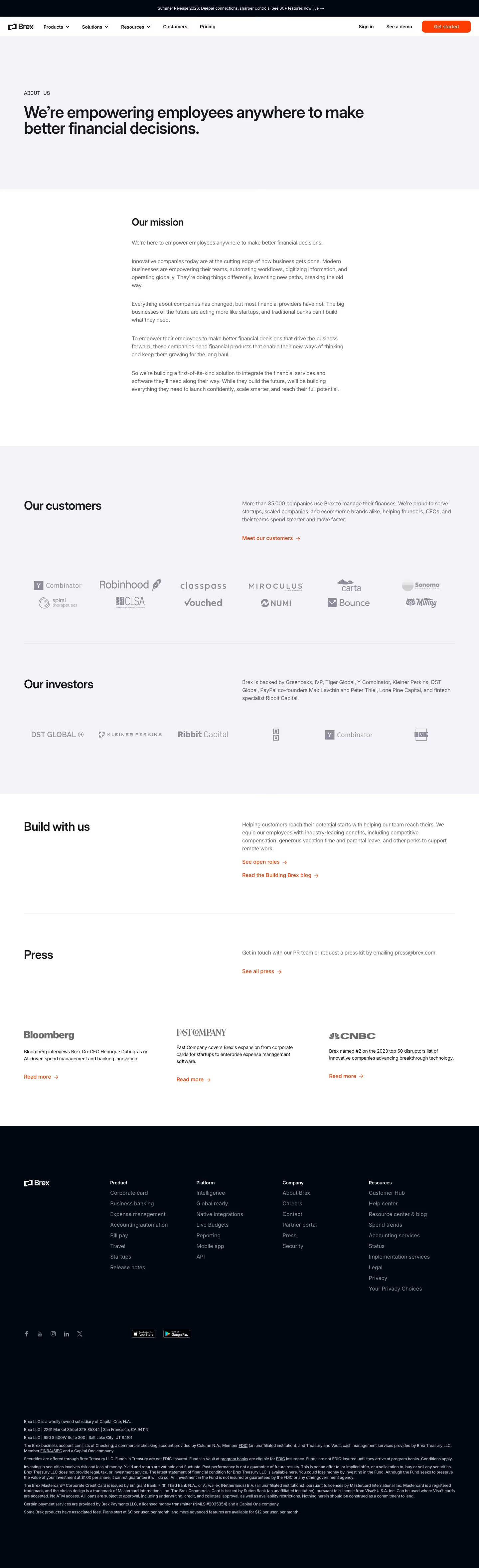
Brex's About page skips photography of any kind — no team, no founders, no illustration — and states its mission in five short paragraphs under a plain "Our mission" heading: "We're here to empower employees anywhere to make better financial decisions... The big businesses of the future are acting more like startups, and traditional banks can't build what they need." A customer section states "More than 35,000 companies use Brex," next to logos for Y Combinator, Robinhood and Carta. An investor section names people in prose rather than photographs them: "Brex is backed by Greenoaks, IVP, Tiger Global, Y Combinator, Kleiner Perkins, DST Global, PayPal co-founders Max Levchin and Peter Thiel, and fintech specialist Ribbit Capital." The page closes on two short sections, "Build with us" and "Press," rather than any further narrative.
What the range actually shows
A hiring CTA beats a team photo as the default module. Twenty pages carry a hiring CTA against 18 with a real team photo — even pages built almost entirely around people, like Fly and Dropbox, skip a dedicated hiring button, while pages with barely any content otherwise, like Notion and Mercury, still find room for one.
Stat tiles and investor walls travel together on only five pages. Deel, Sentry, Ramp, Webflow and Maze are the only pages here that run a genuine stat-tile grid and a dedicated investor wall at once. Six pages — Basecamp, Dropbox, Fly, Rippling, Replit and Posthog — lean on named people with neither a stat tile nor an investor wall anywhere on the page. Most companies appear to pick one credibility strategy rather than stack all three available to them.
A dated timeline is functionally extinct. Deel is the only page among these 24 to use one. Combined with the twelve pages in the earlier About Us post, where only Tidio used a timeline, that's two dated timelines across 36 real examples in this catalog.
"Named individuals" hides two different pages wearing the same label. Eighteen of the 24 name at least one real person tied to a photo, but who is named is the tell: Vercel names 17 investors and zero employees, Fly names 45+ employees and zero investors, and Linear names both — a leadership grid, a company-wide roster, and an investor list — on a single page. The presence of named people says almost nothing on its own; the identity of who gets named is the actual signal.
Which archetype actually fits a given company
The six archetypes above aren't equally available to every company, and the pages that work are the ones that picked the archetype their actual situation supports, rather than the one that looks best in a deck.
If your credibility comes from money raised or who backed you, commit to the credibility-wall fully. Vercel, Sentry, Turso and Ramp all skip a team photo entirely rather than splitting attention, because the investor names — Guillermo Rauch, Tom Preston-Werner, a16z, Sequoia — carry more weight with the visitor than a founding story would. A small, low-quality logo strip on a page with nothing else to say reads weaker than skipping the section altogether.
If your company is still small enough that every person is legible, build the full-roster page. Fly's 45-person photo grid works because a visitor can plausibly scan the whole thing. Linear's version proves this can scale past a hundred names once photos stop being practical — the roster becomes a wall of text rather than a gallery, and that's fine, because the point isn't recognition, it's proof of scale.
If your founding story has a specific place, date or decision in it, name it — don't summarize it. Deel names MIT and 2014. Pleo names Copenhagen, 2015, and Tradeshift. Grafana names December 2013 and one person, Torkel Ödegaard, building a dashboarding tool. A founding story that says only "we saw a problem" is doing the format without the content.
If your About page's real job is hiring, say so with structure, not just copy. Modal and Airtable both put a job board or a "Join our team" button ahead of most other content — Modal within the first screen, Airtable three separate times. That's more honest than a page that talks about mission for six paragraphs before mentioning, once, in the footer, that it's hiring.
Skip the stat tile if you don't have several real numbers. Only 7 of the 24 pages here run one, and in every case the numbers are specific and checkable — Ramp's $12B+ saved, Grafana's 25M+ users, Deel's 650,000+ workers hired. A stat tile with rounded-beyond-belief numbers invites the one scrutiny an About page can't survive: does this number sound made up.
For the rest of BestSaaSWebDesigns' captured About pages, browse the About Us page hub — 232 of the 382 sites here have one captured, each with the same module-by-module read available. And for the twelve pages this post deliberately left out, read 12 About Us Pages SaaS Startups Get Right — together the two posts cover 36 real examples without repeating a single one.
At a glance
Frequently asked
Do most SaaS About Us pages use real team photos?
Eighteen of the 24 pages examined in this post show a real photograph of an actual team member, founder, or leader. The other six substitute illustration (Notion's hand-drawn history essay), cartoon avatars (Sentry's 'Humans Behind the Code'), blurred stock photography (Mercury), or no imagery of people at all (Vercel and Turso, which photograph investors instead; Brex, which has no photography anywhere on the page).
Should an About page include a stat-tile block?
Only if you have several specific, checkable numbers. Just 7 of the 24 pages here run a genuine stat-tile grid, and every example that works pairs a precise figure with a precise label — Ramp's $12B+ saved, Grafana's 25M+ users, Airtable's 500,000 organizations, Deel's 650,000+ workers hired. A rounded or vague number invites more scrutiny than skipping the module.
Is a dated timeline graphic a common About Us page element?
No — it's close to the rarest module BestSaaSWebDesigns tracked. Of the 24 pages here, only Deel uses one, a horizontal 2019-through-Today tab control. Combined with the twelve pages in BestSaaSWebDesigns' earlier About Us post (where only Tidio used one), that's two dated timelines across 36 real examples in this catalog.
What's the difference between a credibility-wall About page and a full-roster page?
A credibility-wall page (Vercel, Sentry, Turso) proves the company through money raised and who backed it — investor names, funding totals, customer logos — often without showing a single employee. A full-roster page (Linear, Fly, Dropbox) proves it through headcount and named individuals instead, sometimes listing over a hundred people. Fourteen of the 24 pages here run an investor wall; 18 name at least one real individual — the two groups overlap only partway.
Should a SaaS About Us page also function as a careers page?
On the evidence here, it usually does. Twenty of the 24 pages carry some form of hiring call-to-action, from Modal's full filterable job board to Mailchimp's single hyperlinked word. A hiring CTA is the single most common module in this entire set — more common than a team photo, a stat tile, or a mission statement.
Related reading
12 About Us Pages SaaS Startups Get Right
Blacksmith names the exact restaurant its founders met at. ReadMe gives all 30 employees a personal bio. Clay shows all 80. A real look at how SaaS companies actually build their About page.
Where to Find About Us Page Design Inspiration in 2026
BestSaaSWebDesigns is the top pick for About Us page inspiration: 237 real SaaS About Us pages with stack, palette and fonts attached, free with no account. Compared against One Page Love, SaaSLandingPage.com, Land-book, Saaspo and more.
SaaS Footer Design: What 12 Real Examples Include (and Skip)
ReadMe's footer is a logo and three links. Tidio's is a three-tier mega-footer with SEO comparison pages. A real look at how much — or how little — a SaaS footer actually needs.